


How to Choose Commercial Refrigeration for Your Venue
A category map for commercial refrigeration — chilled cabinets, freezers, display, prep, blast chillers and cool rooms — with real price bands and where to buy each kind.
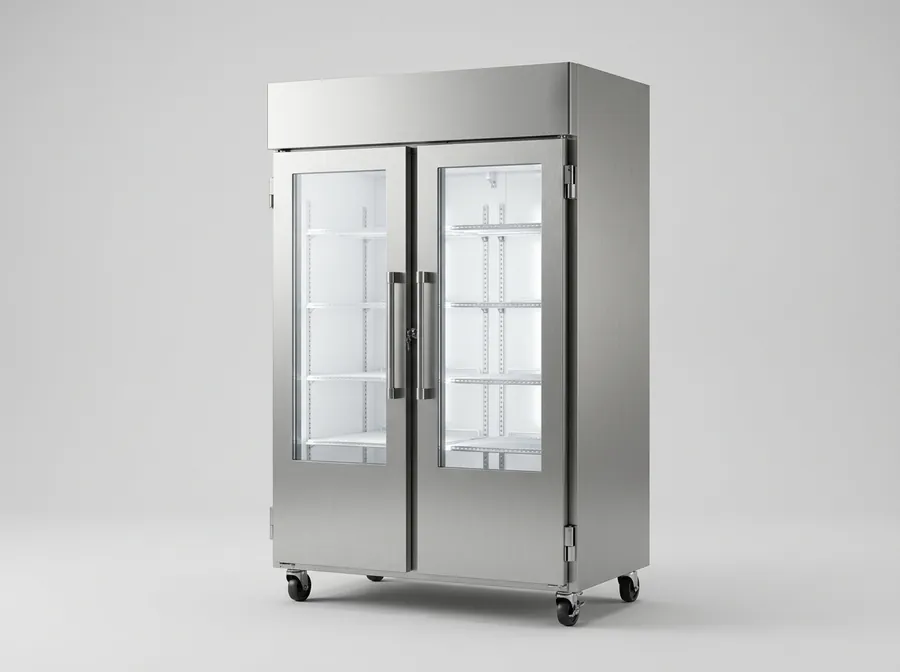
In this article
- The quick answer
- What counts as commercial refrigeration
- The six kinds and what each is for
- What each kind costs relative to the others
- How much refrigeration does your venue need
- Buying order during a fit-out
- Temperature, food safety and verification
- Climate class and Australian conditions
- Installation, services and who is licensed to do what
- What failure costs you
- Frequently asked questions
- Where to go next
"Commercial refrigeration" covers six genuinely different kinds of equipment, and the right one depends on what you're holding, for how long, and who sees it. Chilled cabinets are the deepest, most shoppable segment — 1,576 comparable models across a median of 9 dealers each, middle-half price band $3,365–$7,896 as at 21 August 2026. Freezers sit a step below that. Blast chillers and display units are their own decisions entirely, each with their own spec sheet and their own buying mistakes. This guide maps the category so you pick the right kind before you start comparing individual models.
The quick answer
Storing raw and prepped ingredients in bulk: a chilled cabinet or a cool room. Frozen goods: a dedicated freezer, not a dual-zone compromise. Selling product to the customer at point of sale: display refrigeration. Line prep with gastronorm wells: a prep fridge. Cooling hot cooked food safely: a blast chiller, not a freezer. If more than one of those applies to your venue — and for most commercial kitchens, several do — you need more than one kind of refrigeration, and the sections below help you size and sequence each one.
What counts as commercial refrigeration
Six kinds of equipment share the word "refrigeration" on a spec sheet, and buyers routinely default to the one they already know rather than the one the job needs:
- Chilled cabinets — general-purpose fridges: uprights, underbench, worktop.
- Freezers — dedicated frozen storage, usually −15°C and below.
- Display refrigeration — glass-door merchandising units for front-of-house.
- Prep fridges — refrigerated bases with gastronorm wells for line prep.
- Blast chillers — rapid-cooling units that take hot food through the danger zone fast, not long-term storage.
- Cool rooms — walk-in refrigerated rooms built into or added onto the building.
None of these substitutes for another. A blast chiller is not a big freezer; a display fridge is not a backup for a prep fridge that's failed. Get the kind wrong and you either pay for capability you don't use or discover the gap during a Friday night service.
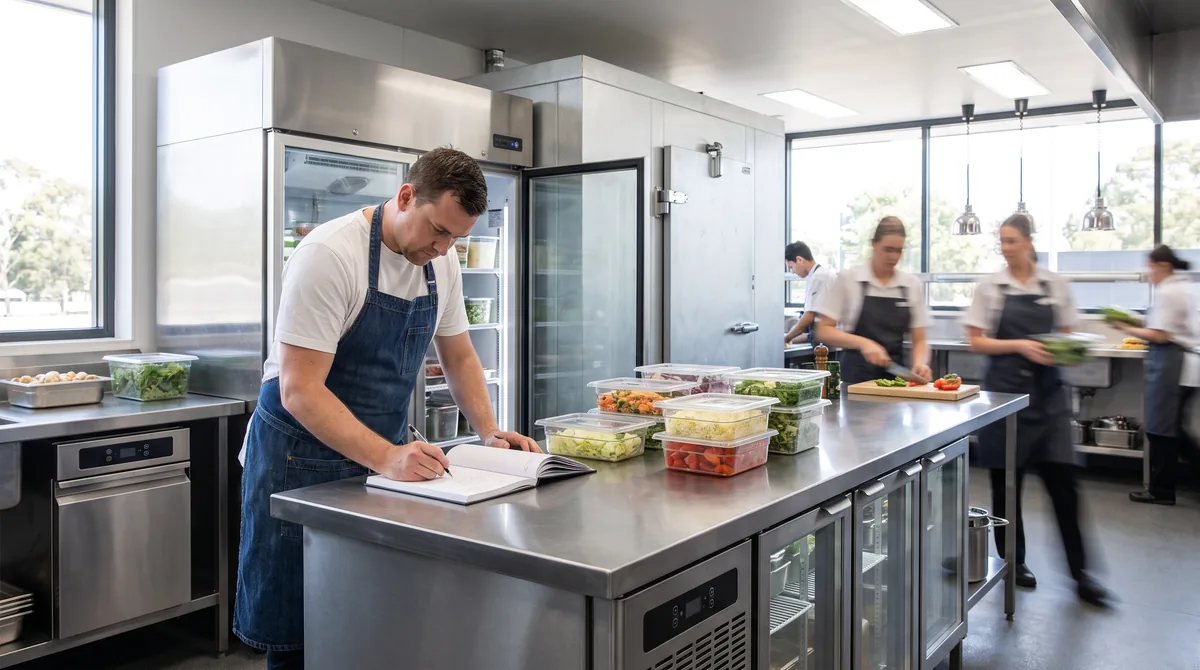
The six kinds and what each is for
Chilled cabinets
The general-purpose workhorse: uprights for bulk storage, underbench and worktop units at the station. Most kitchens need several, not one — a single upright for dry-store-adjacent bulk holding plus two or three underbench units spread across the line is a more common real-world layout than one large cabinet trying to serve every station at once. Door count, shelf configuration and whether the cabinet is solid or glass all belong to this category, not to a separate spec. This is covered in full depth — types, sizing, climate class, brands and site checks — in the commercial fridge buying guide. If your question is specifically "which fridge", start there rather than reading further down this page. Two narrower guides sit under it: the underbench fridge buying guide for station-level storage, and the commercial chest freezer guide for standalone frozen storage that doesn't need an upright.
Freezers
Dedicated frozen storage runs a different compressor, thicker insulation and a lower-set thermostat range than a chiller, and buying it separately from your chilled storage is usually the right call rather than paying for a dual-zone unit that undersizes both zones to fit one cabinet. Freezers in the catalogue skew slightly cheaper than fridges across the middle-half band and carry the deepest dealer coverage in the whole department — a median 11 dealers per model — which makes them one of the easier segments to genuinely price-compare. If your frozen volume is genuinely small, a chest freezer in the back of house is often better value than a frozen zone bolted onto an upright. The mechanism is simple: cold air is denser than warm air, so a top-opening lid spills much less of it on each opening than a front door does. We hold no comparative running-cost data, so treat that as a reason to check the two options rather than as a measured saving. See the chest freezer guide for the sizing logic in detail.
Display refrigeration
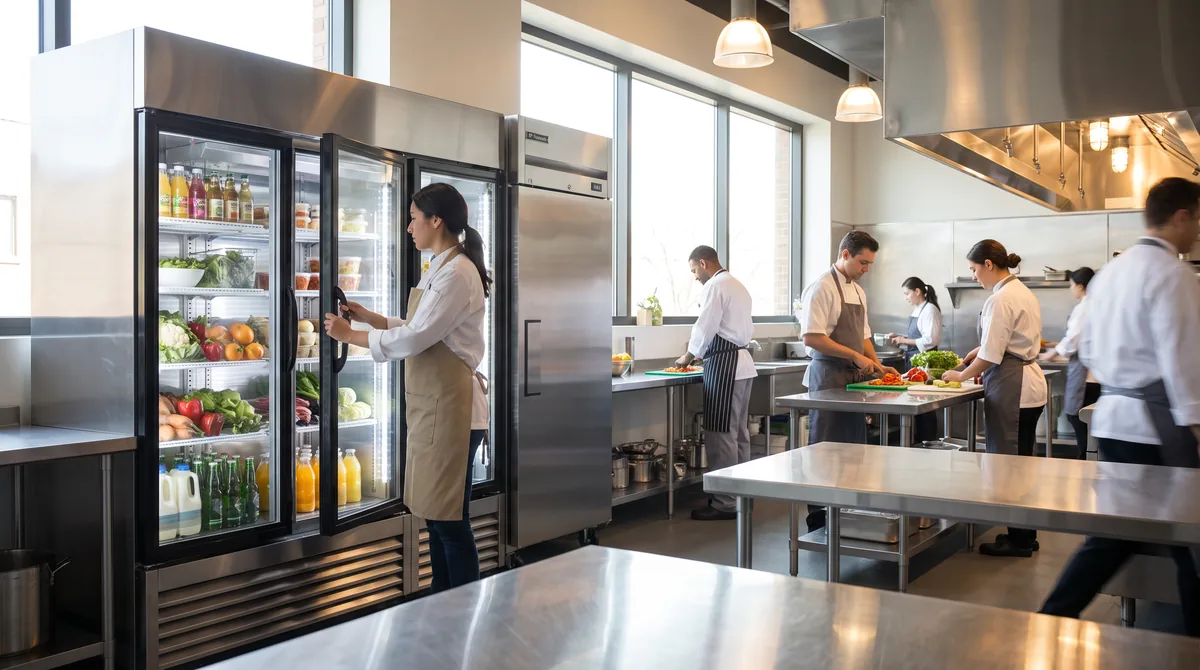
Glass-door cabinets built to sell, not just to store: drink fridges, cake and deli display, self-serve units, open-front multideck cabinets. They trade running efficiency for visibility — glass leaks more heat than a solid door, and every customer-facing open door costs recovery time the cabinet has to make up before the next customer opens it again. Display refrigeration also tends to sit in warmer, more exposed positions in the venue — near entrances, under lighting rigs — which puts more pressure on climate class than a back-of-house cabinet ever sees. The commercial display fridge guide covers the merchandising and airflow trade-offs in detail.
Prep fridges
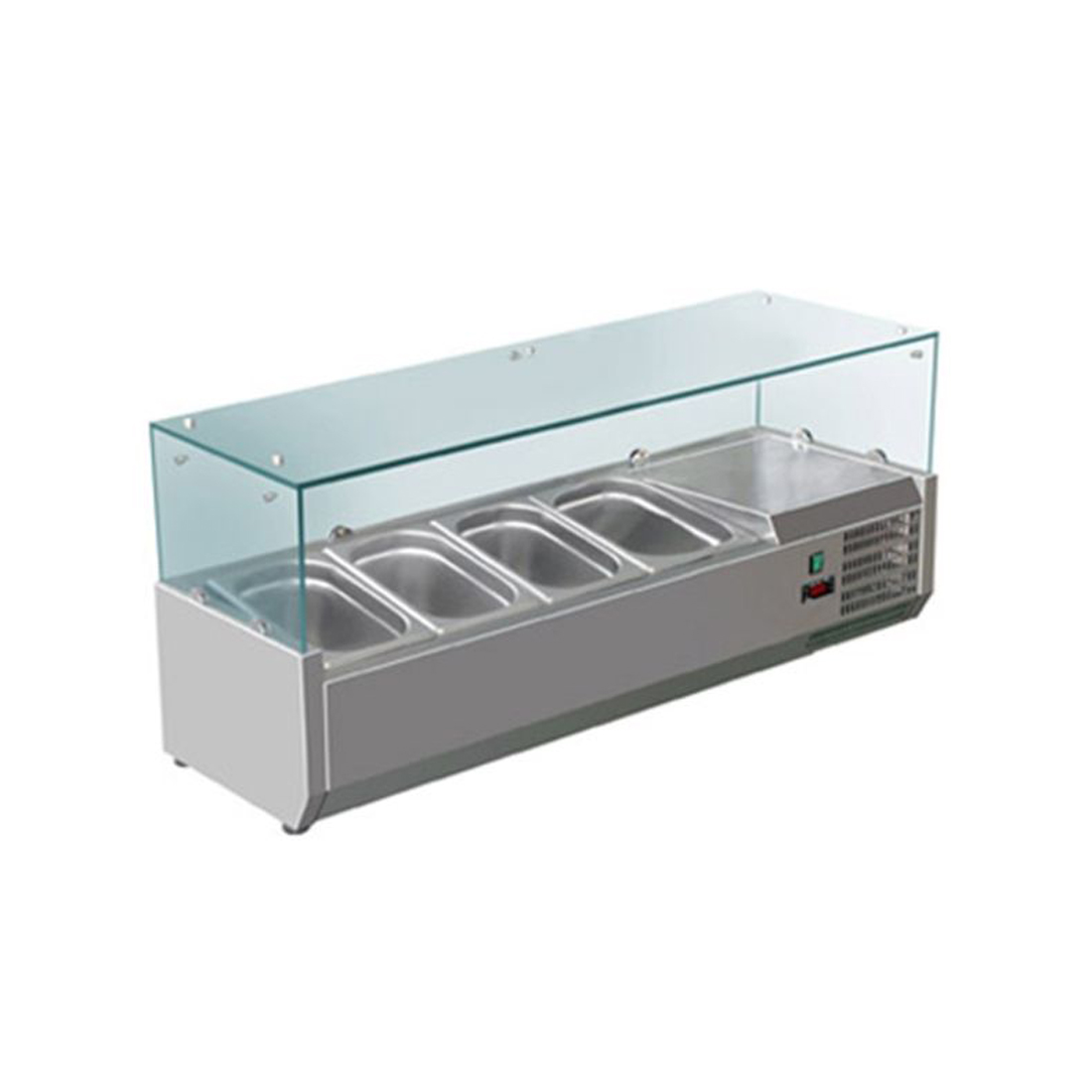
A prep fridge is a refrigerated base with a gastronorm-well top: cold ingredient wells over chilled underbench storage, built for line assembly rather than bulk holding. They cost more than plain storage of the same footprint — the highest median price of any storage-type refrigeration in the catalogue at $7,513 — because you're buying two functions in one cabinet: a working countertop and a refrigerated base. Get the pan configuration right for your menu before you buy; retrofitting a different well layout after installation is not usually possible, and a prep fridge sized for the wrong number of pans becomes a bottleneck at exactly the point in service where you can least afford one.
Blast chillers
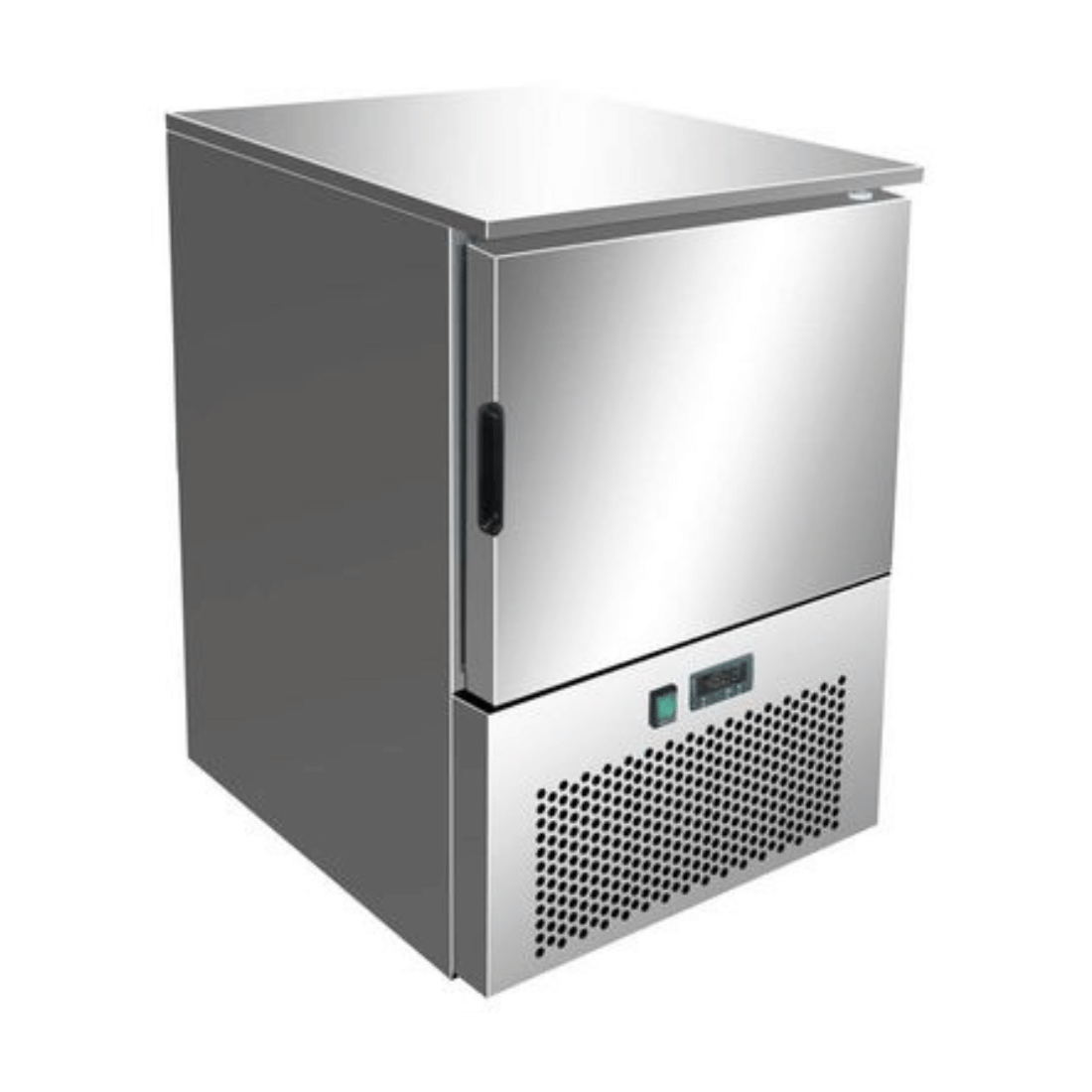
A blast chiller forces hot food through the food-safety temperature danger zone fast, using a much more powerful refrigeration circuit than a storage cabinet. It is not a freezer with a stronger fan, and buying a freezer to do a blast chiller's job will not hold food safely — the airflow, the compressor sizing and the control logic are all built for speed of cooling, not for long, steady holding. This is the highest-cost category in the whole department by a wide margin — a middle-half band of $16,301 to $49,005 against $3,365 to $7,896 for chilled cabinets — and one of the thinnest, with a median of only five dealers stocking any given model. Budget for both the spend and the fact that you may need to widen your search to find a competing quote at all. Venues producing food for catering, function volume, or any large-batch cook-and-cool process are the most likely to need one; a small café doing plate-by-plate service usually isn't.
Cool rooms
A cool room is a walk-in refrigerated room, either factory-panelled or built into the fit-out, sized in cubic metres rather than litres. We publish no price for cool rooms: only one comparable model exists in the KitchenCompare catalogue, well under the five-model floor we set before we'll publish a price statistic. That's a gap in what we can verify, not a claim that cool rooms are rare or cheap — talk to a refrigeration contractor for a quote sized to your room, your compressor location and your door count.
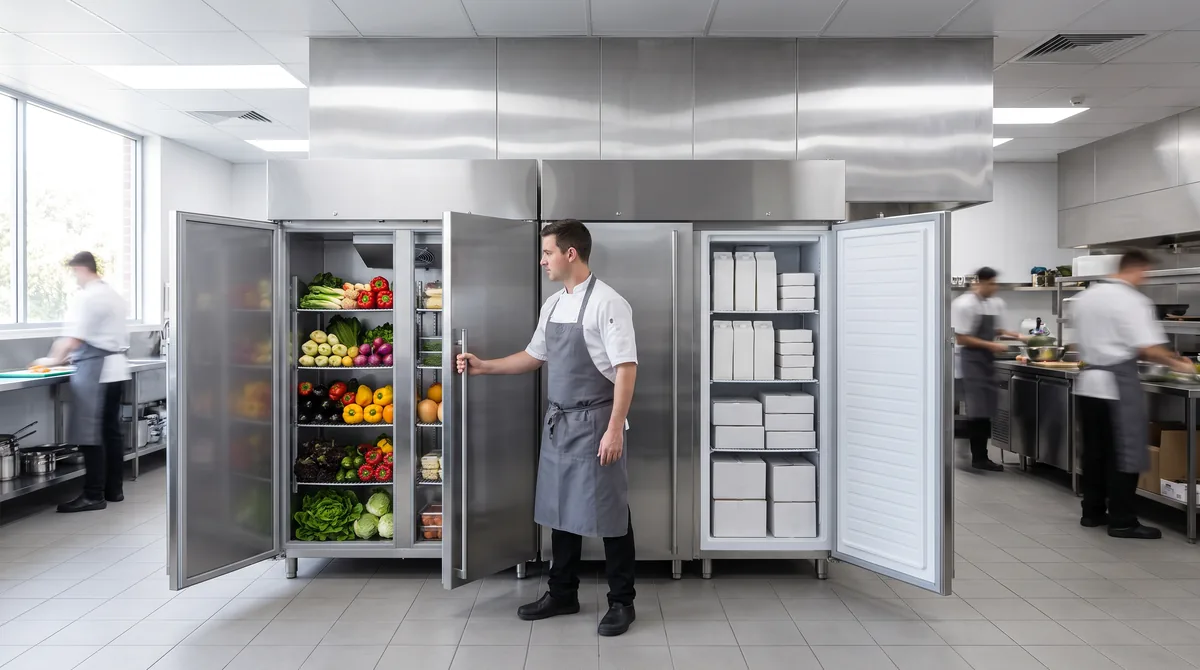
What each kind costs relative to the others
Prices below are the middle-half band of verified listing prices per comparable model — the range between the 25th and 75th percentile — with the median price and the median number of dealers stocking each model, as at 21 August 2026. We publish bands and medians only, never the lowest or highest price in a group: a handful of misclassified accessory listings or a stray retailer error can drag a minimum or maximum a long way from what you'll actually be quoted, and the middle-half band is resistant to that in a way an extreme value isn't.
| Refrigeration group | Comparable models | Middle-half price band | Median | Median dealers per model |
|---|---|---|---|---|
| Fridges | 1,576 | $3,365 – $7,896 | $5,269 | 9 |
| Freezers | 373 | $2,494 – $6,855 | $4,189 | 11 |
| Display Refrigeration | 356 | $3,086 – $8,860 | $5,789 | 10 |
| Prep Fridges | 213 | $3,507 – $9,537 | $7,513 | 6 |
| Blast Chillers | 191 | $16,301 – $49,005 | $33,609 | 5 |
| Ice Cream Machines | 98 | $16,424 – $47,935 | $26,414 | 2 |
| Cellar & Specialty | 37 | $2,299 – $13,297 | $4,244 | 3 |
Across the whole refrigeration department: 2,926 comparable models, middle-half band $3,365 – $9,200, median $5,751. That department total is lower than the sum of the rows above because unclassified and below-floor listings are excluded — the rows are not a clean partition of the total, so don't add them up expecting the department figure.
Read the dealer-depth column alongside the price. Chilled cabinets and freezers are the most shoppable segments — a median of 9 to 11 dealers per model means you can genuinely compare a quote. Blast chillers and ice cream machines sit at the other end: a median of 5 and 2 dealers respectively, so a headline price band there reflects fewer competing quotes than the fridge figures do. Treat those numbers as directionally real but check live availability before you plan a budget around them.
Prep fridges cost noticeably more than plain chilled storage of similar size — you're paying for the well top as well as the cabinet — and freezers run a little below fridges across the middle half of the market. Cool rooms carry no published band for the reason above.
Know which kind you need? Compare commercial refrigeration on the exact supplier model number, with live retailer prices and price history — never matched on product names.
Compare refrigerationHow much refrigeration does your venue need
Capacity comes from how you buy and prep food, not from the biggest unit that fits the gap. Three things drive it:
- Delivery rhythm. A venue on daily deliveries needs far less cold storage than one on twice- weekly drops. Size to your longest gap between deliveries, plus a margin for a busy weekend, not to an average week.
- Prep style. Batch-prep kitchens need more chilled storage than freezer space; kitchens built around frozen goods need the reverse. A menu that changes seasonally needs some slack built in either way.
- Service movement. Underbench and prep fridges hold what a station uses in a shift; uprights and cool rooms hold what the kitchen buys in bulk. Most commercial kitchens need both tiers, and it's cheaper to plan that split before the fit-out than to retrofit it after.
A single oversized unit is rarely the efficient answer. Two smaller dedicated cabinets — one chiller, one freezer — usually beat one dual-zone compromise on both running cost and resilience: if one fails, you haven't lost both temperatures at once. The same logic applies at station level: a prep fridge sized exactly to today's menu leaves no room for a new dish without a second purchase, while a slightly larger one absorbs a menu change without a full re-fit of the line.
Growth matters more than most first-time buyers plan for. A venue that expects covers or turnover to grow in the next two to three years should size storage for that trajectory, not for opening week — refrigeration is disruptive and expensive to add mid-operation compared with specifying it correctly up front. Conversely, don't over-buy against a growth forecast that isn't funded or committed; an oversized cabinet running near-empty costs more to run per litre of actual storage than a right-sized one running full, because compressors work harder cycling a mostly empty box than a well-packed one.
If you're not sure where your venue sits, work backwards from your busiest single service: what does the kitchen need on hand to get through that shift without a mid-service delivery, plus your delivery-gap buffer on top. That number, not the floor plan, is the one that should set your capacity.
Buying order during a fit-out
Refrigeration doesn't all go in on the same day, and getting the order wrong costs real time on site:
- Cool rooms and walk-ins first, if you're having one built rather than buying a panel kit — the room needs to be built into the space before walls, services and flooring close around it. Lead times here are the longest in the category by a wide margin.
- Fixed chilled and frozen storage next — the uprights and cabinets that anchor your cold storage layout, ordered once the kitchen design is locked so power and clearance are confirmed.
- Prep and underbench units once the line layout is set, so gastronorm-well configuration matches the actual menu.
- Display refrigeration close to opening, since front-of-house fit-out and merchandising plans tend to change latest.
- Blast chillers whenever your food-safety plan requires rapid cooling — often overlooked until a council or certifier asks how you cool large-batch cooked food, at which point it becomes urgent. Order it with the rest of the fixed equipment, not as an afterthought.
Every refrigeration purchase during a fit-out is really two purchases: the unit, and the electrical or refrigeration trade work to commission it. Confirm both are booked together — a cabinet sitting uninstalled because the sparky isn't booked for another fortnight is a common, avoidable delay. Cool rooms in particular carry the longest total lead time in the category: the build itself, the panel or refrigeration-plant order, and the trade booking to commission it can each run to weeks independently, and none of them can be compressed by rushing the others.
It's worth ordering slightly ahead of when you think you'll need each item rather than exactly on schedule. A fit-out running two weeks behind on the shopfit but on time on refrigeration still needs somewhere for equipment to sit; a fit-out running on time on the shopfit but behind on refrigeration delays your opening date directly. Lead time risk sits almost entirely on the refrigeration side of a commercial kitchen build.
Temperature, food safety and verification
Holding food at a safe temperature is a legal requirement for any Australian food business, and the specifics — which temperature, for which food, and how you must monitor and record it — sit with Food Standards Australia New Zealand (accessed 21 August 2026) and your state or territory food authority, since enforcement and record- keeping detail vary by jurisdiction. Broadly, FSANZ guidance is built around keeping potentially hazardous food out of the temperature danger zone where bacteria grow fastest, both in storage and during cooling after cooking — which is exactly the job a blast chiller does and a standard freezer doesn't.
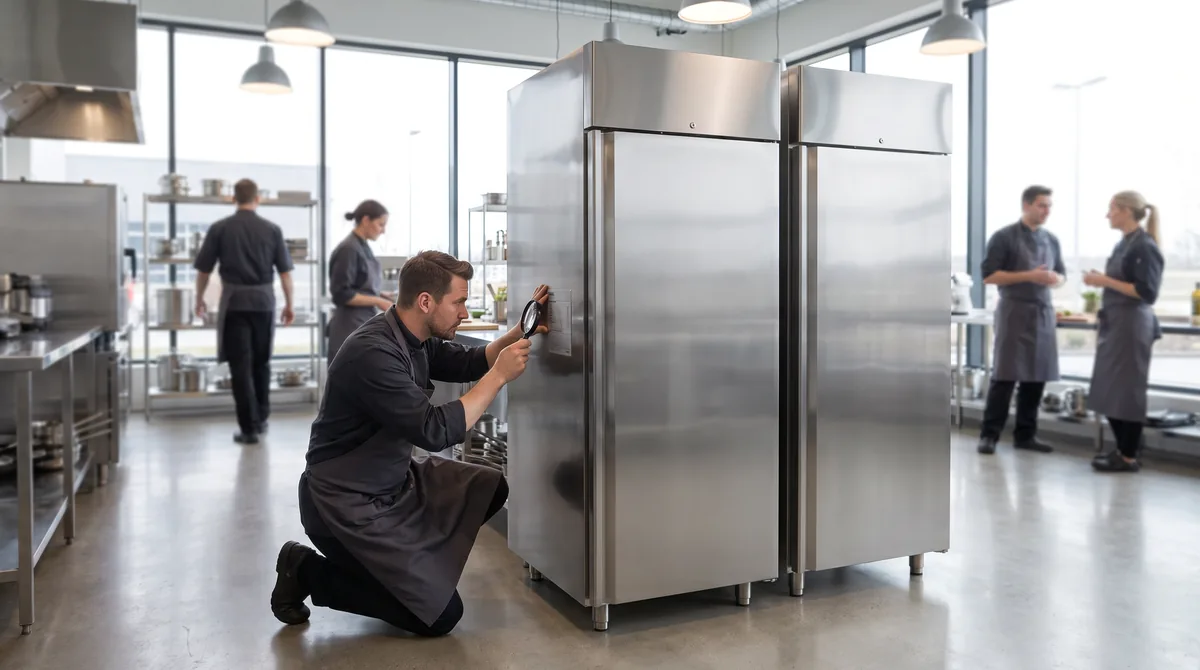
A cabinet's digital display is not the same as the temperature of the food inside it. Verify with a probe thermometer, not the door display, and log readings the way your food safety plan requires — your council or certifying body will ask to see the records, not the cabinet spec sheet. This applies to every kind of refrigeration in this guide, not just chilled cabinets: a display fridge that looks cold from the front can still run warm at the back of a crowded shelf, and a blast chiller's job is specifically to move food through the danger zone within the time your food safety plan sets, which is a process to verify and log, not a setting to trust once and forget.
New equipment should be checked against a calibrated probe before it goes into service, not assumed correct because it's new. A cabinet that reads two or three degrees off its true internal temperature straight out of the box is not a common fault, but it is one that costs nothing to rule out and a great deal to discover after a food-safety incident.
Climate class and Australian conditions
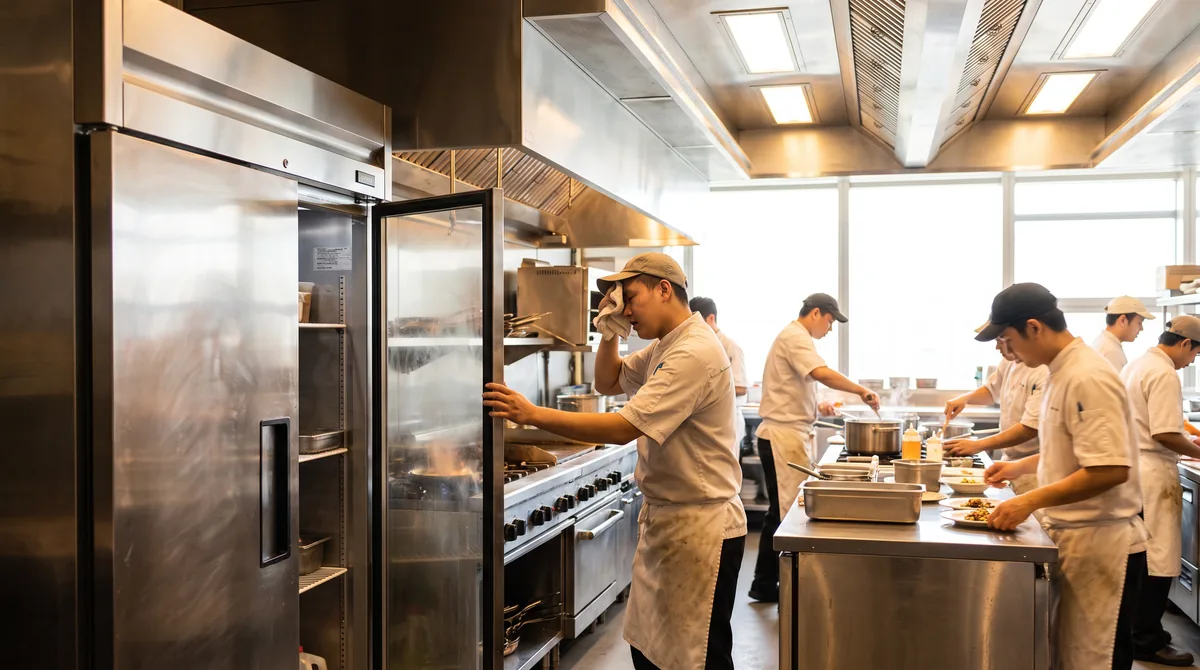
Every commercial fridge and freezer is rated to hold its setpoint at a stated maximum ambient temperature — its climate class. Most units listed by Australian retailers are rated for tropical ambients, which is the norm for what's stocked here rather than the exception, but that doesn't mean every model is: a unit rated for a cooler test room will struggle beside a hot cookline in an Australian summer regardless of what the brochure photo suggests. Check the climate class or stated maximum ambient on the exact model before you buy, especially for anything installed near heat. The commercial fridge buying guide covers climate class, refrigerant and GEMS energy-rating detail in full — this article only flags that it matters across every refrigeration type, not just chilled cabinets.
The same ambient-temperature pressure applies to every category on this page, not only chilled cabinets. A blast chiller working next to a hot line, a display fridge under kitchen or shopfront lighting, or a freezer in an unconditioned back-of-house storeroom all have to cool against a higher ambient than the manufacturer's test conditions assume. Where a unit will run in a hot or poorly ventilated position, treat climate class and stated clearance as part of the buying decision, not paperwork to check after delivery.
Installation, services and who is licensed to do what
Refrigeration work touches electrical and, on some units, gas and refrigerant handling — all areas with licensing requirements that vary by state and by the specific job. As a general pattern:
- Refrigerant handling (installing, servicing or decommissioning a sealed system) requires a licensed refrigeration mechanic in every Australian jurisdiction.
- Electrical connection, particularly for three-phase equipment like larger blast chillers and cool room condensing units, requires a licensed electrician.
- Plumbing for drainage on ice machines, some prep fridges and cool room condensate lines may need a licensed plumber depending on your local requirements.
Confirm the exact licensing requirement for your state and your specific installation with your installer or local regulator before work starts — this varies by jurisdiction and by equipment class, and getting it wrong can void warranty as well as breach compliance.
Cool rooms and larger blast chillers are the categories most likely to need multiple trades coordinated on the same day — electrical, refrigeration and sometimes plumbing all arriving in sequence rather than any one of them working alone. Confirm with your builder or project manager which trade is responsible for booking each one; on a fit-out with several subcontractors, "who books the refrigeration mechanic" is a question worth asking explicitly rather than assuming someone else has it covered.
What failure costs you
A failed prep fridge on a Tuesday afternoon is an inconvenience. A failed cool room over a long weekend is a stock write-off and, depending on what was inside it, a food-safety incident you have to manage and potentially report. The cost of refrigeration failure scales with what's stored inside and how long before someone notices — which is the practical argument for splitting storage across multiple dedicated units rather than one large one, and for keeping a working thermometer and an alarm or monitoring routine on anything holding high-value or high-risk stock overnight.
Most refrigeration failures don't happen without warning. A compressor that's starting to struggle usually runs longer cycles, recovers more slowly after the door opens, and builds up ice or condensation somewhere it shouldn't before it fails outright. A short daily temperature check and a periodic look at the condenser and door seals catches most of that early, and it's cheaper by a wide margin than replacing lost stock or an entire unit under emergency timelines. Read equipment maintenance habits for the routine checks that catch a failing compressor before it becomes a stock loss, and why model numbers matter before you order a replacement part or compare a repair quote against a new unit — the wrong model number gets you the wrong part, and on a refrigerant circuit that's not a mistake worth making twice.
Insurance and supplier agreements sometimes have their own requirements around temperature monitoring and record-keeping for high-value cold storage — check your policy and any wholesale supply agreements alongside your food-safety obligations, since the two don't always align automatically.
Frequently asked questions
Do I need a cool room or will cabinets do?
Most cafés, small restaurants and QSR sites run entirely on chilled cabinets and freezers. Cool rooms suit venues with high bulk-storage volume, function catering, or butchery and whole-carcass handling. If your bulk stock fits comfortably in one or two uprights with room to grow, cabinets are usually the simpler and faster option.
What is the difference between a blast chiller and a freezer?
A blast chiller rapidly cools hot cooked food through the food-safety danger zone using a much stronger refrigeration circuit; it is a processing step, not storage. A freezer holds food that is already cold at a stable low temperature over time. Using a freezer to cool hot food does not achieve the same result and does not meet food-safety cooling requirements.
How much refrigeration does a venue my size actually need?
There's no fixed ratio to floor space or covers — it depends on your delivery rhythm, prep style and menu mix. Work out your longest gap between deliveries, your split between chilled and frozen stock, and your service-line pan configuration, then size to that rather than to whatever fits the kitchen footprint. If you're growing, add capacity for that trajectory rather than for the opening-week menu alone.
Can I use a domestic fridge or freezer in a commercial kitchen?
Domestic units aren't built for the continuous duty cycle, recovery speed or ambient conditions a commercial kitchen puts them through, and whether one is acceptable at all in a licensed food business is a question for your local council or certifying body — this varies by jurisdiction and by the scale of your operation, so confirm it before you buy rather than after an inspection.
Should I buy one big unit or several smaller ones?
Several dedicated units usually beat one large one for both running cost and resilience. If one unit fails, you haven't lost your entire cold chain, and dedicated chillers and freezers run more efficiently than a shared dual-zone compromise.
What order should I buy refrigeration in during a fit-out?
Cool rooms and walk-ins first, since they need to be built into the space before it closes around them. Then fixed chilled and frozen storage, then prep and underbench units once the line layout is locked, then display refrigeration and blast chillers close to opening.
Which refrigeration needs a licensed technician to install?
Any unit with a sealed refrigerant circuit needs a licensed refrigeration mechanic for installation and servicing, and three-phase units typically need a licensed electrician for connection. Requirements vary by state — confirm with your installer or local regulator before work starts.
What happens to my stock if a unit fails overnight?
That depends entirely on what's stored and how long before it's noticed, which is why splitting storage across multiple dedicated units and keeping a monitoring routine on high-value stock matters more than any single spec on the cabinet itself. Review your food safety plan's response for a temperature excursion before it happens, not after.
Where to go next
Once you know which kind of refrigeration you need, go to the guide that covers it in depth: the commercial fridge buying guide for chilled cabinets, the underbench fridge guide for station storage, the commercial chest freezer guide for standalone frozen storage, the display fridge guide for merchandising units, and the ice machine buying guide if ice production is next on your list. Planning the whole fit-out budget at once? Start with the kitchen fitout budget guide, which sets refrigeration spend in context against the rest of the equipment list rather than in isolation.
Whichever kind you land on, the same rule applies once you've settled the specification: compare prices on the exact supplier model number, not the product name on the box. Model numbers that differ by a single letter can hide a different compressor, a different climate class or a different door configuration, and that's the detail that determines whether the unit you're comparing is actually the unit you're buying. When you're ready to price real models against each other, compare on that number rather than the marketing name.
One model from each kind of refrigeration
Live listings from the KitchenCompare catalogue, one widely stocked model per refrigeration type, so you can see how the kinds compare before you choose a category. Chilled cabinets are covered in depth in the commercial fridge buying guide.
Selected from the KitchenCompare catalogue by how many Australian retailers hold a current listing for the exact supplier model number — the models you can genuinely price-check. Not a ranking, not a quality judgement, and never influenced by any commercial relationship. Prices and retailer counts last checked .
Freezers
Frozen bulk and service stock
-
Thermaster
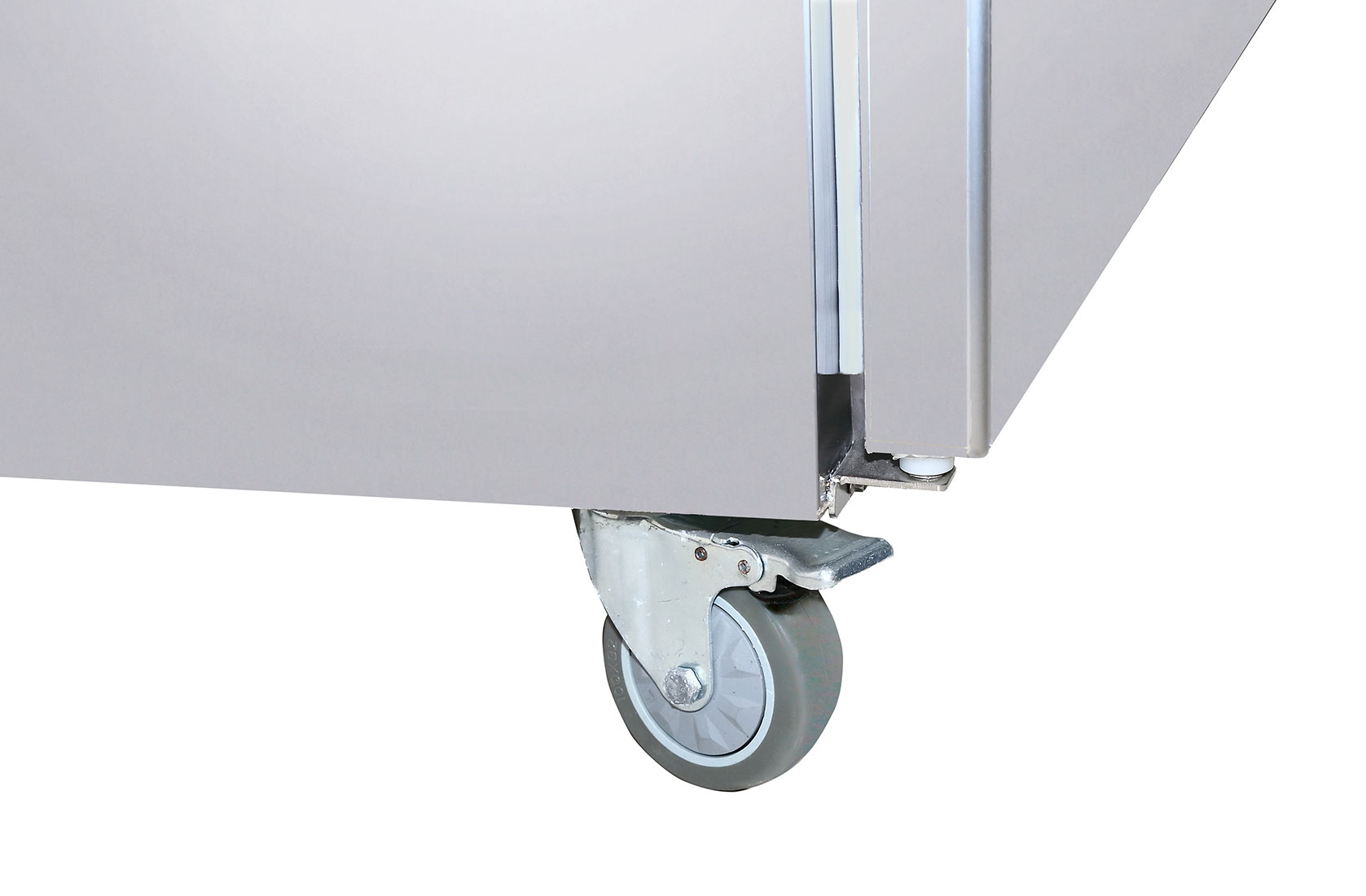
Thermaster SUF1500 Three Door SS Upright Storage Freezer
Model SUF1500- Capacity (Litres)
- 1500
- Door Type
- Hinged Doors
Display refrigeration
Front-of-house merchandising and self-serve
-
FED-X
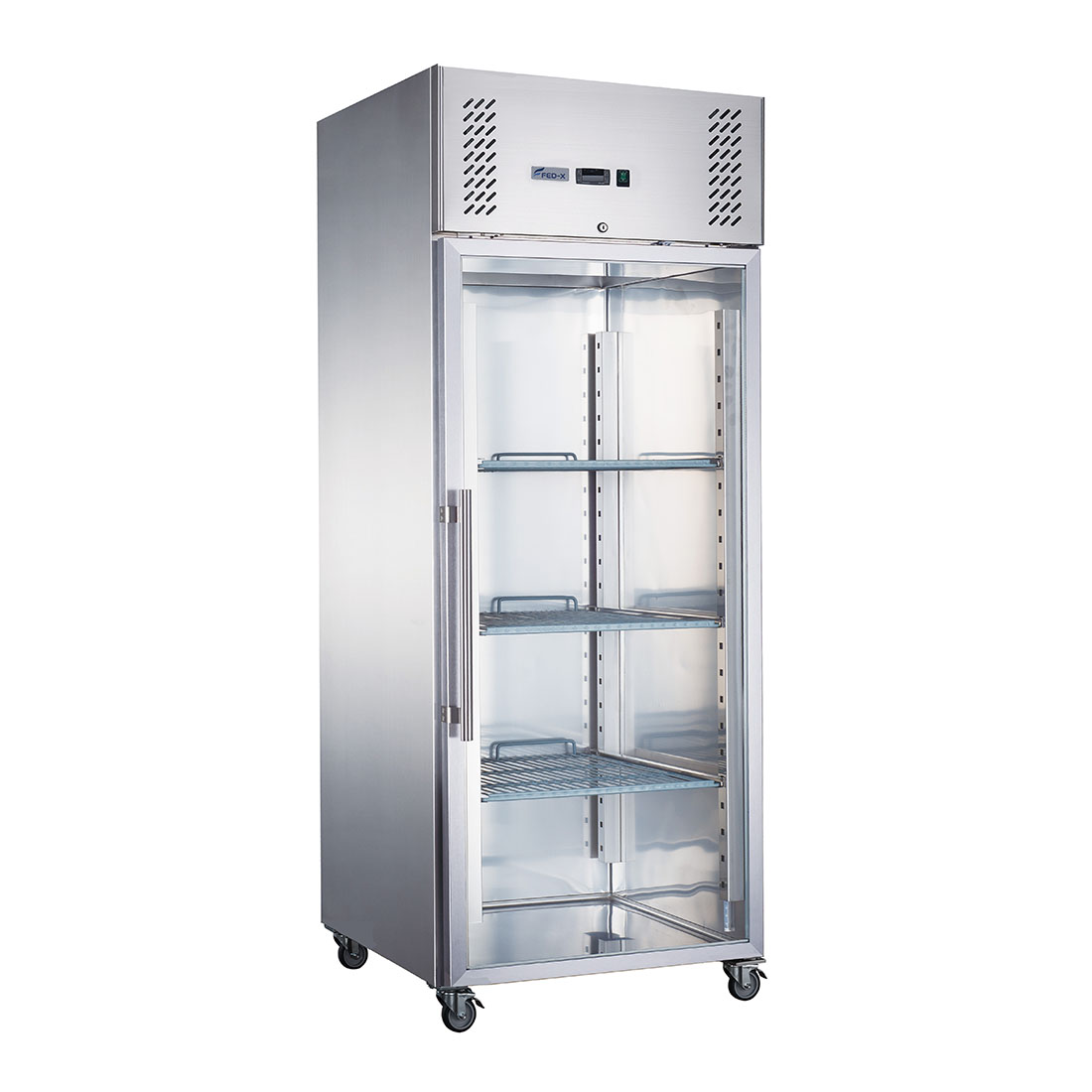
FED-X XURF600G1V S/S Full Glass Door Upright Freezer
Model XURF600G1V- Capacity (Litres)
- 600
- Temperature Range
- -15ºC to -18ºC
- Door Type
- Hinged Doors
Prep fridges
Chilled gastronorm wells over refrigerated storage
Blast chillers
Bringing cooked food through the danger zone fast
Specifications shown are the values the exact model publishes in our catalogue; fields a listing does not record are left out rather than guessed. Confirm dimensions, electrical requirements and warranty against the manufacturer's data sheet for that exact model number before you order.