


Commercial Display Fridge Guide: Doors, Formats and Placement
Glass door, sliding or open front? A display fridge is a merchandising decision as much as a refrigeration one — here is how to make it without guessing.
In this article
- Glass door, sliding door or open front
- Single, double and multi-door sizing
- Upright, undercounter and countertop
- Lighting, shelving and presentation
- Where you put it, and what that does to it
- Running cost and door discipline
- Beyond drinks: cold food and cake display
- Cleaning, condensers and glass
- Comparing specific models
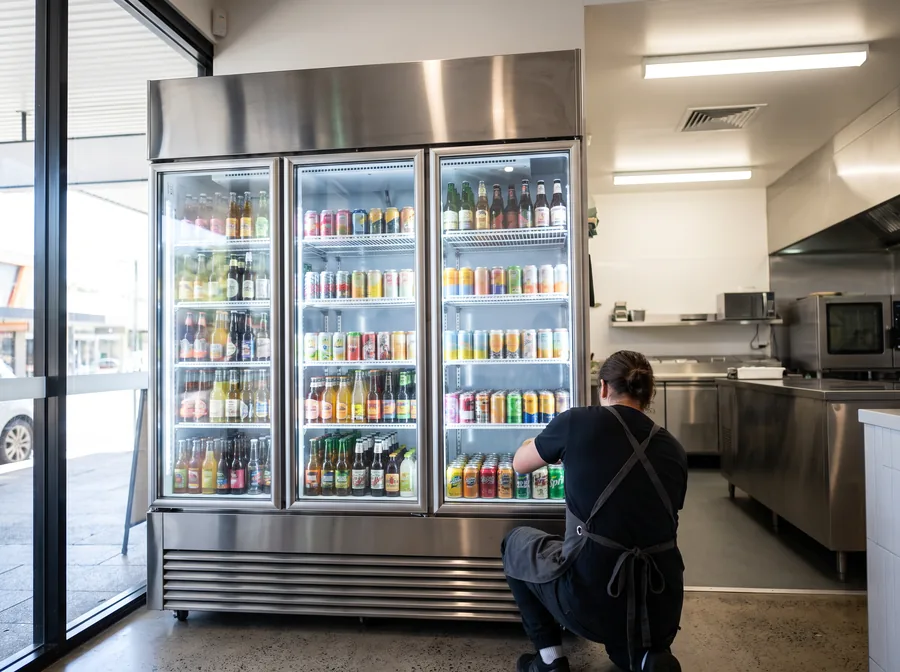
A display fridge is a merchandising decision as much as a refrigeration one. You are buying visibility, lighting, shelf presentation and a restocking flow that staff can keep up with. If none of those matter — if nobody is choosing product directly from the cabinet — you want a storage fridge instead, and it will hold temperature better and cost less to run.
For the broader refrigeration picture across storage, underbench and cold rooms, start with how to choose commercial refrigeration.
Glass door, sliding door or open front
This is the core decision and there is no universally right answer.
Hinged glass doors are the default. They seal well, they show the product, and they are simple. The cost is the swing: a hinged door needs aisle or footpath clearance in front, which is a real constraint in a narrow shop or behind a service counter.
Sliding glass doors remove the swing entirely, which is why they appear in tight retail aisles and behind bars. The trade-offs are that only half the cabinet is open at a time, the tracks need cleaning and eventually wear, and the seal on a sliding door is generally not as good as a hinged one.
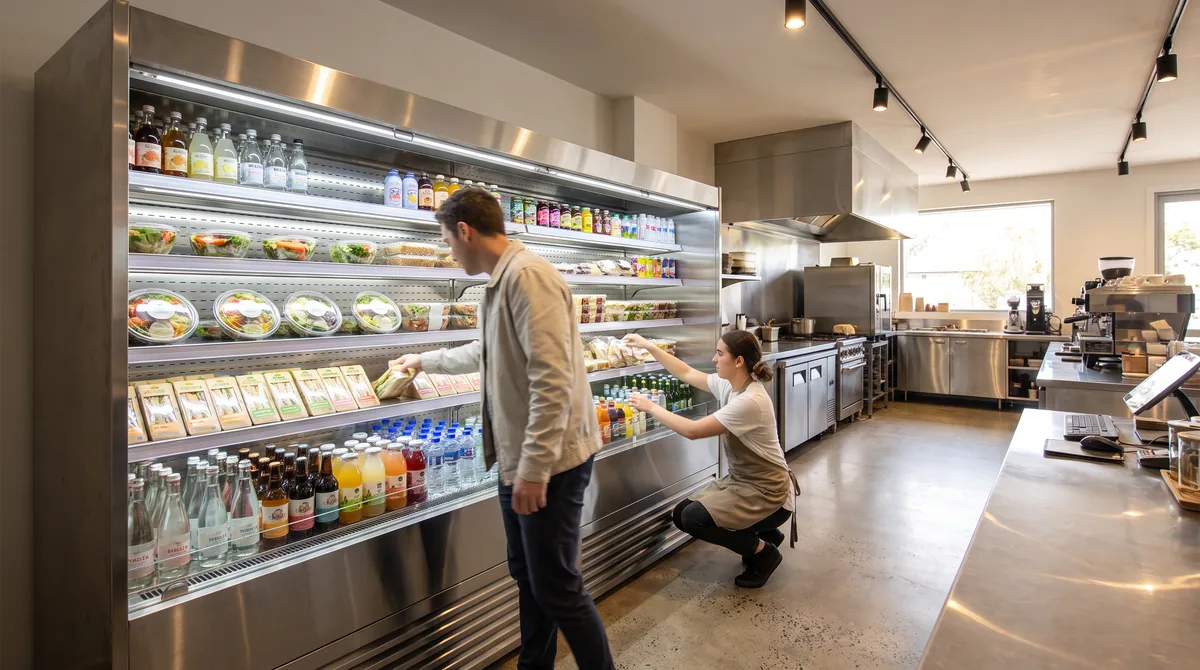
Open-front (air-curtain) merchandisers have no door at all. Cold air is held in by a curtain across the opening. Nothing sells cold product harder than an open front — the customer reaches in without a barrier, and stock is visible from further away. Everything else about them is a cost: they work continuously to hold a temperature against an open face, they are far more sensitive to warm ambient air, draughts and door traffic, and any obstruction of the air curtain by badly stacked stock degrades performance immediately.
Choose honestly. If your site is a busy retail shopfront where impulse purchase is the business, open front is a legitimate choice with a known running cost. If it is a café fridge that also happens to be visible, a glass door is the better machine.
| Door type | Sells hardest when | Costs you |
|---|---|---|
| Hinged glass | Standard retail and cafe use, good seal | Swing clearance in front of the cabinet |
| Sliding glass | Tight aisles and behind a bar | Only half the cabinet opens; tracks wear; weaker seal |
| Open front (air curtain) | Impulse purchase is the business | Works continuously against an open face; very sensitive to warm air, draughts and blocked airflow |
Single, double and multi-door sizing
Size the cabinet to your restocking rhythm, not to the wall you have spare.
- How much do you sell of the displayed product between restocks? That is the minimum the cabinet has to hold on display.
- Where does the backup stock live, and who moves it? A cabinet that empties mid-afternoon and cannot be restocked until close is the wrong size, regardless of its litres.
- What is the delivery interval? Weekly delivery and daily restocking are different problems.
- Does the product need to be cold when it goes in? Loading warm stock into a display unit means asking it to chill and to hold at the same time, which it is not designed for.
Door count follows from that. More doors gives you more display face and more capacity; it also means a bigger cabinet, a bigger heat load and more glass. Internal volume figures are a comparison between models rather than a promise about how many of your specific cans, bottles or packs will fit — check internal dimensions and shelf spacing against your actual product.
Upright, undercounter and countertop
Upright is the standard retail and shopfront format, giving maximum display face for the floor area.
Undercounter display units go beneath a service counter, showing product to a customer standing at the counter. They suit cafés and takeaway counters where floor space is committed.
Countertop units are small, high-visibility cabinets for impulse product at the point of sale.
A related but distinct category: bar and back-bar fridges are built for service behind a bar rather than for customer self-selection, with different door configurations, depths and finishes. If your unit is behind the bar and staff serve from it, look at bar and back-bar fridges instead — that category has its own considerations.
Lighting, shelving and presentation
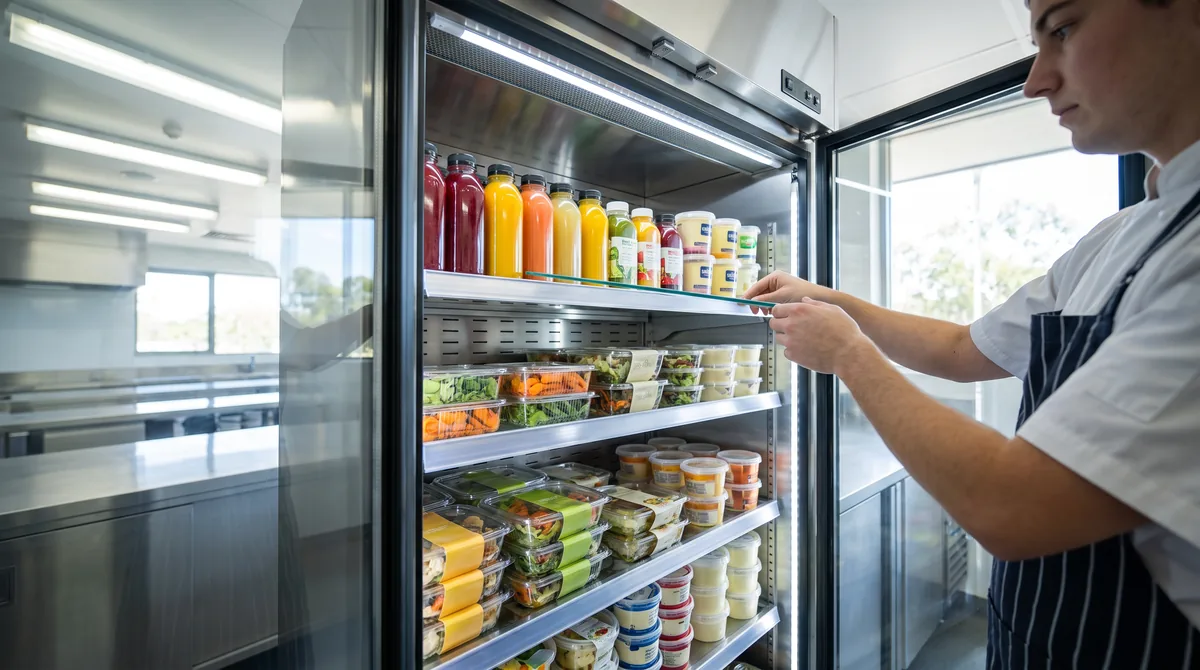
- Lighting. LED lighting is standard on current display cabinets. What varies is where it is — canopy only, or per-shelf. Per-shelf lighting keeps the lower shelves sellable; canopy-only lighting leaves the bottom of a tall cabinet dim, and dim shelves do not sell.
- Adjustable versus fixed shelves. Adjustable shelving lets you re-space for a changed product mix, which you will do more often than you expect. Check the adjustment increments, not just whether it adjusts.
- Canted (angled) shelves tilt product towards the customer, showing labels and faces rather than edges. They cost you a little capacity and gain you presentation.
- Gravity-feed shelving rolls cans and bottles forward as stock is taken, so the front row is always full without staff facing up the shelves. In a high-turnover drinks cabinet it is a genuine labour saving.
- Shelf loading. Check the stated shelf load against a full row of glass bottles, which is heavier than most people assume.
The general mechanism is simple: stock that is visible and easy to reach sells; stock in a dark, crowded or badly faced cabinet does not. That is the argument for spending on lighting and shelving, and it does not need a percentage attached to it to be true.
Where you put it, and what that does to it
Placement affects a display fridge more than almost any other cabinet, because the design already concedes something to visibility.
- Direct sun through a shopfront window is a heat load the cabinet was never tested against. Radiant heat on the glass and on the cabinet body will make it run continuously.
- Warm ambient. Every commercial cabinet carries a climate class stating the ambient conditions it is designed to hold temperature in. It is on the rating plate and the specification sheet. A cabinet that performs in a cool storeroom can struggle in a glazed shopfront in summer, and that is not a fault — it is a specification mismatch.
- Blocked airflow. Stock stacked over the air outlet, a wall too close behind the unit, or a condenser exhausting into a corner will all degrade performance. Leave the manufacturer's clearances.
- Door traffic. A cabinet by a propped-open entrance is fighting the street.
Tell the supplier where the cabinet is actually going and check the climate class of the exact model against that position.
If you buy an open front, buy the night blind and use it
An air-curtain cabinet holds temperature against an open face for every hour it is switched on. Pulling a blind over it outside trading hours substantially reduces that load. It is the single cheapest thing you can do to an open-front unit, and it only works if it becomes a close-down habit rather than an accessory in a cupboard.
Running cost and door discipline
A display fridge is opened far more often than a storeroom unit — that is the point of it — and every opening costs cold air. Over the life of the cabinet that adds up, and the cheapest unit to buy is often not the cheapest to own.
What you can control, qualitatively:
- Door seals. Check them weekly. A seal that no longer grips along its whole length is a continuous leak.
- Self-closing hinges. They remove the single most expensive habit in retail refrigeration, which is a door left ajar.
- Night blinds on open-front units. Pulling a blind over an air-curtain cabinet outside trading hours substantially reduces the load on it. If you buy an open front, buy the blind and use it.
- Loading practice. Do not stack over the air outlet, and do not overload above the load line.
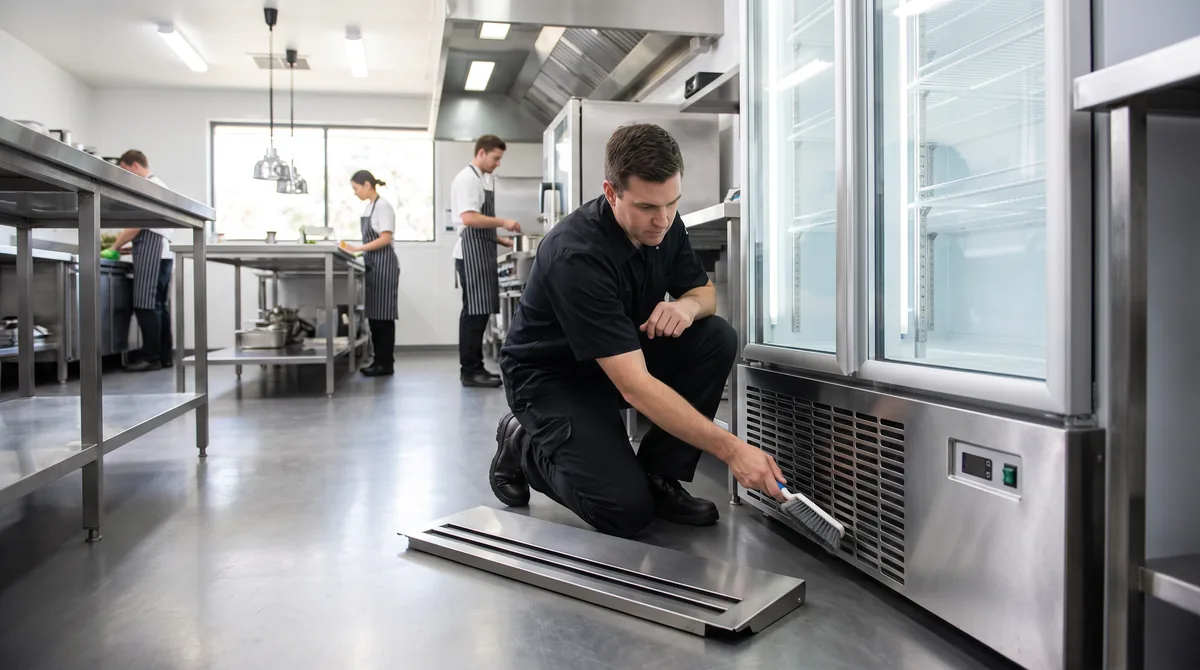
- Condenser cleaning. A dirty condenser makes a healthy cabinet behave like a failing one.
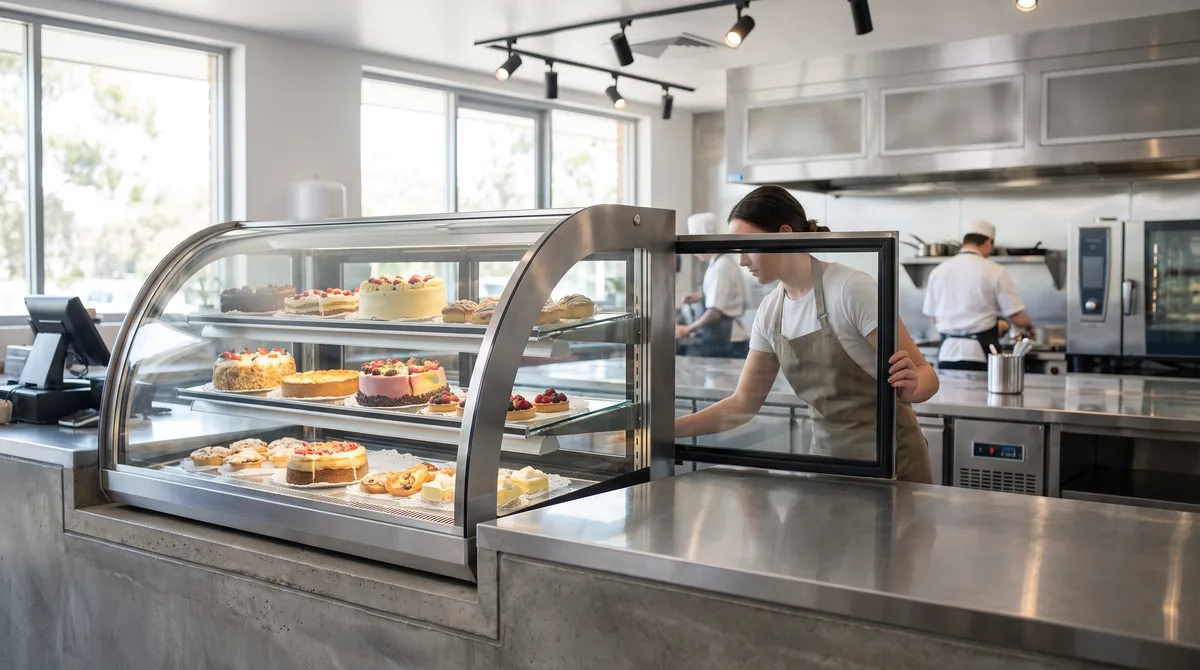
Beyond drinks: cold food and cake display
If what you are displaying is food rather than packaged drinks — cakes, patisserie, sandwiches, salads, deli product — a drinks display fridge is usually the wrong cabinet. Food display units are built with different humidity behaviour, different shelf and tray systems, and presentation designed around food rather than cans. See cold food displays.
Cleaning, condensers and glass
- Glass. Inside and out, daily. A smeared or fogged door defeats the entire purpose of the cabinet.
- Condenser. Clean at the manufacturer's interval. This is the single highest-value maintenance task on any refrigeration.
- Seals and tracks. Wipe seals; on sliding doors, clear the tracks of grit, which is what wears them out.
- Condensate drain. Keep it clear so you do not get water in the cabinet or on the floor.
- Lighting. Replace failed lamps or strips promptly — a dark shelf is a shelf that stops selling.
For the wider habits, see maintenance habits that extend commercial equipment life.
Know the door type and where it will stand? Compare display fridges on the exact supplier model number, with live retailer prices and price history — never matched on product names.
Compare display fridges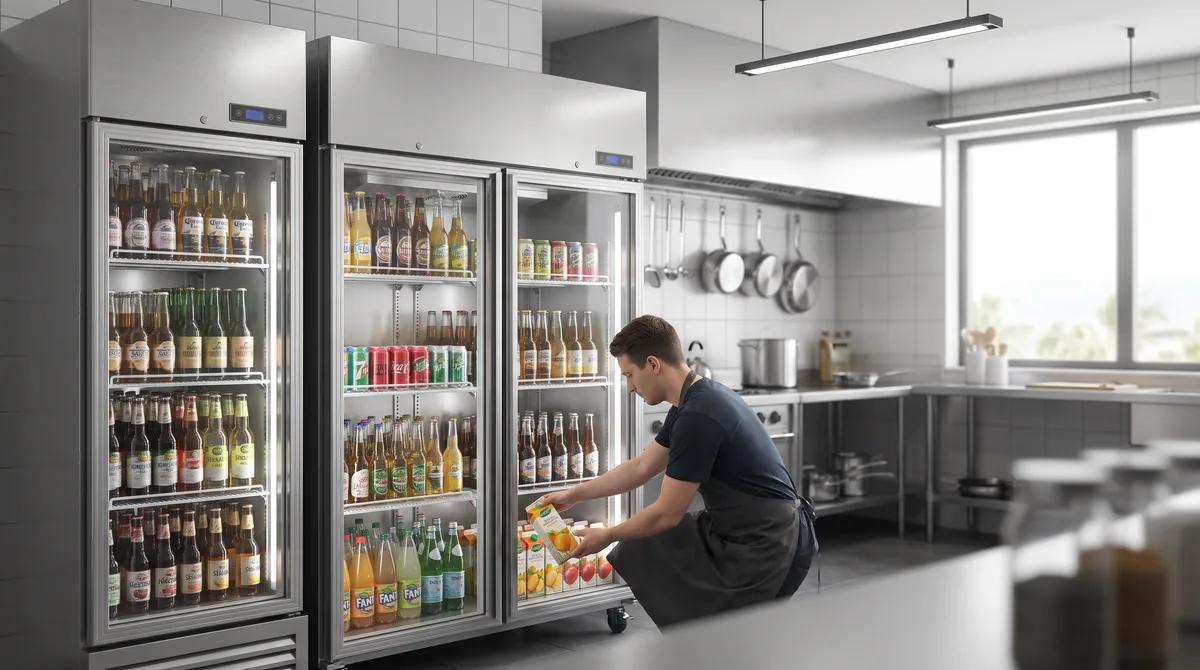
Comparing specific models
Display refrigeration is a category where one series can span hinged and sliding doors, single and multi-door versions, different climate classes, different refrigerants, different lighting configurations and different shelving — behind model numbers that differ by a suffix. Two listings with near-identical names can be genuinely different cabinets.
That is why every comparison on this site is matched on the exact supplier model number rather than on product names; see why model numbers matter. Prices shown on the site include GST.
Compare like for like on: external and internal dimensions, door type and count, climate class, refrigerant, lighting configuration, shelving type and adjustability, self-closing hinges, night blind included or not, electrical requirement, warranty terms and local service coverage.