


Budgeting a Commercial Kitchen Fit-Out: Where the Money Actually Goes
We won't invent a total fit-out cost, but we can show you what commercial kitchen equipment actually costs by department, with real dealer data.
In this article
- The quick answer
- Why we will not quote you a fit-out cost
- What the equipment actually costs
- Where the money goes inside refrigeration and cooking
- The services budget
- Spend up here, economise there
- Smallwares: cheap per item, expensive in volume
- Shopping the same model harder
- Second-hand: where it works and where it bites
- What first-time buyers forget
- Comparing two quotes that are structured differently
- Frequently asked questions
- Where to go next
You cannot get a credible total fit-out cost from anyone who hasn't seen your site, your landlord's existing services and your council's requirements. Anyone quoting you a number before that is guessing, and so would we. What we can tell you, from tracked prices across dozens of Australian retailers, is what the equipment itself actually costs — by department, not by rumour. That is the one part of the budget you can price before you've even signed a lease.
The quick answer
A fit-out budget has three components: equipment, services and building works, and compliance and approvals. We hold detailed, verifiable data on the first. We hold none on the second and third, and we're not going to pretend otherwise. What follows is the equipment data in full — department bands, refrigeration and cooking detail, smallwares, and the one number that changes how you should shop: the same model can cost a median of 38.6% more from one dealer than another (as at 21 August 2026). Use that gap before you use anything else in this guide.
Why we will not quote you a fit-out cost
Every commercial kitchen fit-out guide you'll find online eventually states a number: a total cost, a cost per square metre, a services-to-equipment split, a trade day rate. We're not going to do that, and it's worth explaining why rather than just leaving the gap.
KitchenCompare's database tracks equipment: models, listed prices, specifications, retailers. It does not track electrical contracting, gas fitting, plumbing, mechanical exhaust installation, grease trap work, floor and wall linings, or council and food-authority approval costs. Those figures move with your specific site — an existing three-phase supply versus a switchboard upgrade, a building with a grease arrestor already in place versus one that needs a new pit dug, a landlord's exhaust riser that happens to be the right size versus one that isn't. A number that ignores all of that isn't a budget, it's a guess dressed up as data.
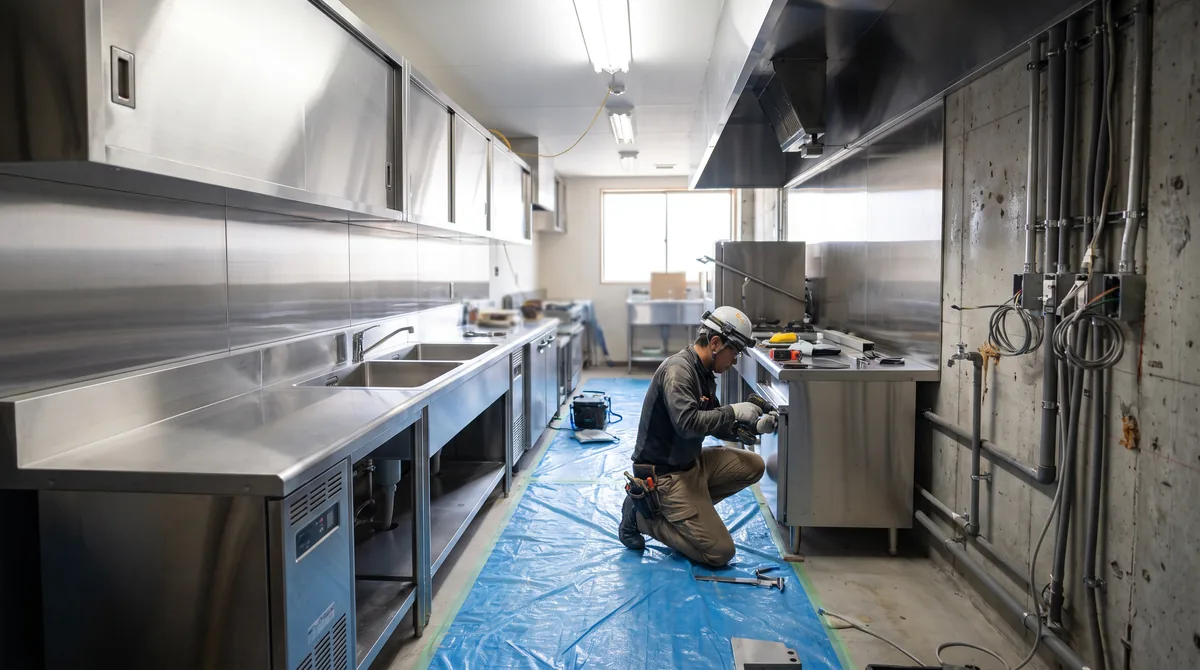
What we do have, and what almost nobody else in this market publishes with any rigour, is verified equipment pricing at scale: 37,474 comparable models tracked across 49 active Australian retailers, as at 21 August 2026. That's the half of the budget you can genuinely price before you talk to a single trade. Get quotes from your electrician, your gas fitter, your mechanical services contractor and your local council or certifying authority for the other half — those numbers are specific to your building and nobody selling equipment online can substitute for them.
One thing operators consistently underestimate: services and compliance work is not a rounding error against the equipment list. It's a genuinely large line, driven by things the equipment list itself dictates — your cooking appliances determine your exhaust canopy, and the canopy drives duct runs, fans and make-up air. That's an operator observation from the pattern in how fit-outs get quoted, not a statistic we can defend with a number, so we're stating it as judgement and leaving it there. Decide your cookline early. It prices your ceiling before you've chosen a single fridge.
What the equipment actually costs
Here is the first-party number. All prices are advertised prices, inc GST, per each, new stock only, and exclude delivery, installation and commissioning. They are what retailers list a model for, not a transacted or negotiated price, and they are not a quote.
The table below shows the interquartile band — the middle half of comparable per-SKU median prices — and the overall median for each department, as at 21 August 2026. We publish bands and medians only, not the minimum or maximum for each department. A handful of misclassified or clearly wrong listings sit at the extremes of any large retail dataset, and a true floor or ceiling would be corrupted by them; the middle half is the number you can actually trust.
| Department | Comparable models | Middle-half band | Median |
|---|---|---|---|
| Commercial Ovens | 1,555 | $7,583 – $31,701 | $17,171 |
| Cooking Equipment | 4,099 | $3,441 – $12,338 | $7,136 |
| Refrigeration | 2,926 | $3,365 – $9,200 | $5,751 |
| Food Displays | 1,304 | $533 – $6,579 | $2,709 |
| Work Table & Storage | 3,406 | $201 – $1,220 | $611 |
| Gastronorm & Food Storage | 1,171 | $11 – $45 | $21 |
| Crockery | 7,132 | $10 – $31 | $18 |
| Tabletop | 1,984 | $11 – $44 | $23 |
| Utensils | 1,778 | $7 – $24 | $11 |
| Cutlery | 1,710 | $6 – $46 | $13 |
| Drinkware | 2,463 | $5 – $14 | $8 |
| Disposables | 1,159 | $8 – $88 | $40 |
Comparable models: 37,474 across 49 active Australian retailers, as at 21 August 2026. Department totals do not sum to the full count — below-floor and unclassified segments are suppressed rather than published on thin evidence.
Ovens are the single heaviest equipment line in a commercial kitchen, by a wide margin: the middle half of comparable models runs from $7,583 to $31,701, with a median of $17,171. Cooking equipment generally — fryers, griddles, ranges, woks — sits well below that, and refrigeration sits below cooking equipment again on a per-unit basis, though refrigeration usually appears multiple times on a kitchen's equipment list where an oven typically appears once or twice.
Read the band, not just the median, when you're pricing a specific machine. A $17,171 median oven price tells you the centre of the market; the $7,583–$31,701 band tells you the actual spread you should expect to see once you start comparing real listings, and it's wide enough that a single quoted price in isolation tells you very little. If a quote for a comparable oven lands well outside that band in either direction, that's the point to ask why — not to assume the number is simply correct because it came printed on a letterhead.
It's worth being precise about what "comparable" means here, because it's doing real work in this table. A comparable model is one our catalogue can match against a stated department and, where relevant, subtype — a benchtop combi and a floor-standing combi both sit inside Commercial Ovens, for instance, at very different price points, which is part of why the band is as wide as it is. Use the department and group tables as a starting orientation, then check the exact model you're actually buying against the live category pages, where you can filter by the specification that matters for your kitchen rather than reading a blended average.
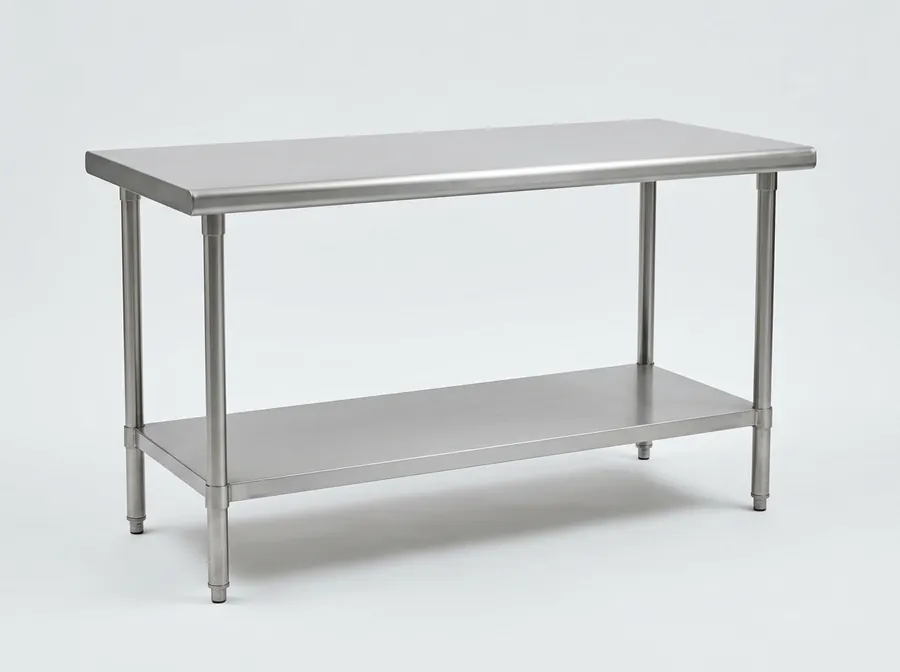
Work Table & Storage, at a median of $611, looks trivial next to an oven until you count how many benches, shelving units and trolleys a real kitchen needs. A department with a low per-unit median can still be a large total if the quantity is high — the same caution applies here as it does to smallwares further down this guide.
Where the money goes inside refrigeration and cooking
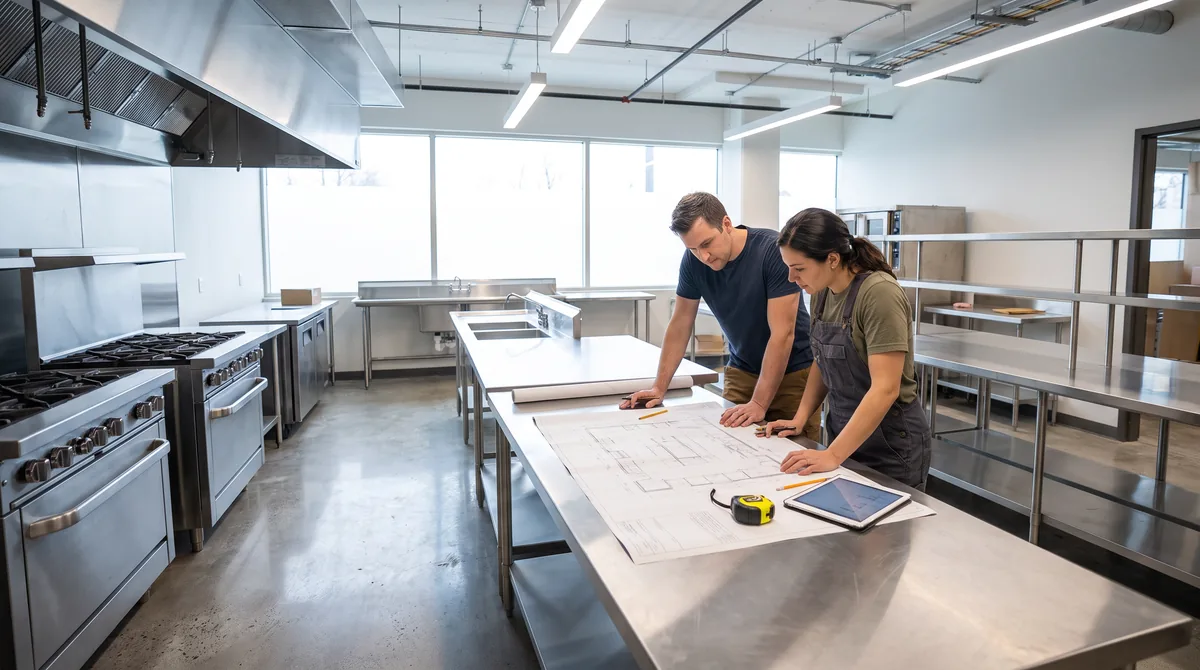
Refrigeration and cooking equipment are broad departments that hide very different price points underneath. If you're allocating a budget across specific machine types rather than a department total, this is the detail that matters.
| Refrigeration group | Models | Middle-half band | Median |
|---|---|---|---|
| Blast Chillers | 191 | $16,301 – $49,005 | $33,609 |
| Prep Fridges | 213 | $3,507 – $9,537 | $7,513 |
| Display Refrigeration | 356 | $3,086 – $8,860 | $5,789 |
| Fridges | 1,576 | $3,365 – $7,896 | $5,269 |
| Freezers | 373 | $2,494 – $6,855 | $4,189 |
Blast chilling is a step change in spend against everything else in refrigeration — a median of $33,609 against $4,000–$7,500 for the rest of the category. If a blast chiller is on your list because food-safety cooling requirements point you toward one, budget for it as its own line, not as "another fridge." The sample here is thinner than the other groups (n=191), so treat the band as indicative rather than exact.
Prep fridges sit above plain storage fridges and freezers on a per-unit basis, which reflects the gastronorm wells and refrigerated base doing two jobs in one cabinet. If your line needs both cold storage and cold prep capacity, a combined prep unit can cost less overall than a separate storage fridge plus a standalone prep bench, depending on your layout — worth pricing both ways before you commit.
For a full walk-through of refrigeration configuration — upright, underbench, prep, display, drawer — see how to choose commercial refrigeration and the focused commercial fridge buying guide. Ovens don't have an equivalent group breakdown published here yet, but if a combi oven is your heaviest single line (and for most commercial kitchens it is), read the combi oven buying guide before you price one.
The services budget
We said above that we hold no services or trade cost data, and we're not going to soften that here. What we can do is name what's actually in this line, because "services" is vague enough that first-time buyers underestimate it by not knowing what it covers.
A commercial kitchen services scope typically includes:
- Electrical capacity — often a supply upgrade, not just new outlets, once cooking and refrigeration loads are totalled.
- Gas supply — a new or upgraded gas line and metering if the site wasn't previously a commercial kitchen.
- Water and drainage — supply to sinks, dishwashers and ice machines, and floor waste and grease-affected drainage that meets your local authority's requirements.
- Mechanical exhaust and make-up air — the canopy over your cookline, duct runs, extraction fans, and the make-up air system that replaces what the exhaust removes. This is frequently the single largest services line, and it's sized by your cooking equipment, not chosen independently of it.
- Grease trap or grease arrestor — sized to your cooking volume and usually a condition of trade waste approval.
- Floor and wall linings — food-safe, cleanable finishes to the standard your local food authority expects.
The National Construction Code and your local authority's approval process govern several of these — ventilation, grease management and food-safety-driven building requirements among them. We are naming that as the class of requirement driving cost, not quoting a clause or attaching a figure to it: those requirements vary by state, by council and by what's already on your site, and only your building surveyor, certifier or local authority can tell you what applies to your specific premises. Confirm every services requirement with your installer and your local authority before you budget against it.
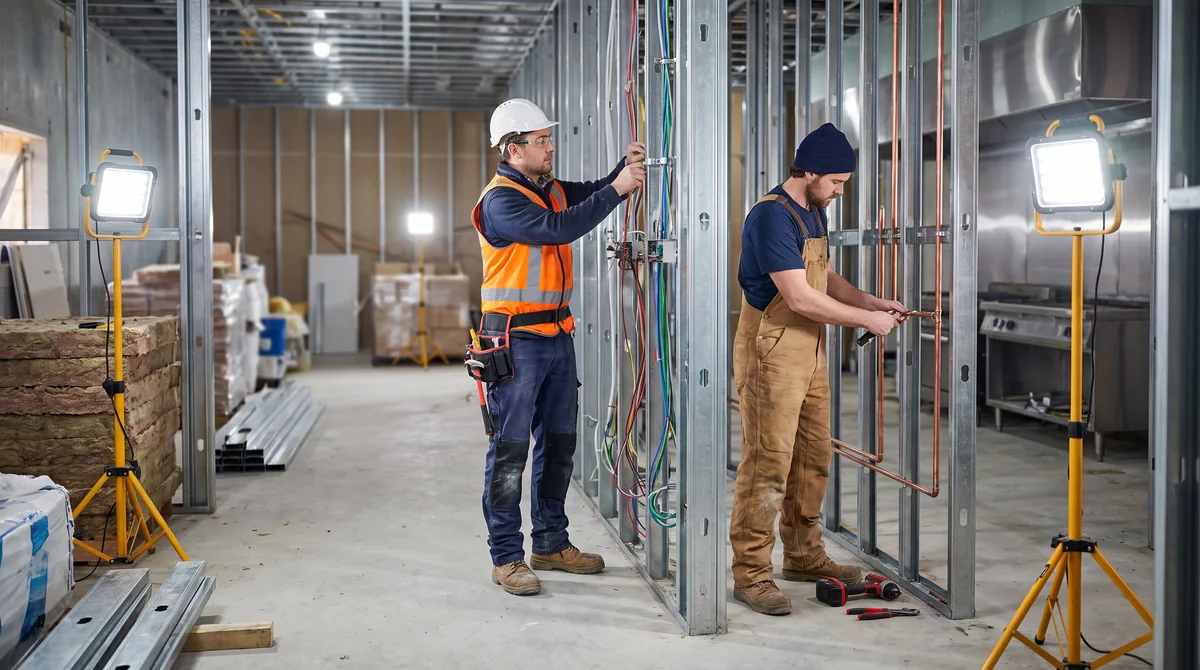
The practical move: take your equipment list — the actual models, not a category placeholder — to your electrician, gas fitter and mechanical services contractor before you sign for the equipment. Loads, gas ratings and exhaust volumes are specific to the model, and a quote based on "a six-burner range" is not the same as a quote based on the six-burner range you're actually buying.
Spend up here, economise there
A simple rule allocates equipment money well once you know the department bands above: spend on what runs all day, economise on what runs rarely.
- Refrigeration runs 24 hours a day, every day. At a department median of $5,751 and a middle half of $3,365–$9,200, this is not where the cheapest listing in the band should win. Reliability and running cost here compound daily, for years.
- Your primary cooking platform — the combi, the fryer bank, the wok line, whatever your menu actually leans on — earns its quality tier every single service. This is usually your single largest oven-department line, and it's the equipment that determines your exhaust canopy, so getting it right the first time avoids a services re-quote later.
- Benches, shelving, sinks and trolleys are simple stainless fabrications. At a Work Table & Storage median of $611, mid-market options serve most venues indistinguishably from premium ones — this is a low-risk place to hold the line on cost.
- The appliance you use one hour a week is a candidate for the value end of its band, or for not buying at all until the menu proves it earns a place on the line.
Smallwares: cheap per item, expensive in volume
Crockery, cutlery, drinkware, utensils, tabletop and gastronorm containers are the departments with the lowest per-item medians in our whole dataset — a plate at $18, a piece of cutlery at $13, a glass at $8 (medians, as at 21 August 2026). Looked at one item at a time, none of it looks like a budget line worth worrying about.
That reading is wrong at fit-out scale, and it's the single easiest place for a first-time buyer to underestimate a budget. Smallwares spend is quantity-driven, not price-driven. An $18 median plate becomes a five-figure line once you multiply it by settings for 300 covers plus breakage stock plus back-of-house service ware. The department table below shows the per-item bands; the total is a function of your covers, your table turns and your breakage allowance, none of which we can price for you without knowing your venue.
| Department | Comparable models | Middle-half band | Median |
|---|---|---|---|
| Gastronorm & Food Storage | 1,171 | $11 – $45 | $21 |
| Crockery | 7,132 | $10 – $31 | $18 |
| Tabletop | 1,984 | $11 – $44 | $23 |
| Utensils | 1,778 | $7 – $24 | $11 |
| Cutlery | 1,710 | $6 – $46 | $13 |
| Drinkware | 2,463 | $5 – $14 | $8 |
| Disposables | 1,159 | $8 – $88 | $40 |
Budget smallwares as a quantity calculation first and a price comparison second: settle covers and turns, then price the per-item medians against your actual count, including a realistic breakage and loss allowance for glassware and crockery specifically — they're the two departments most exposed to service breakage.
Shopping the same model harder
This is the most directly actionable number in this guide. Across a basket of 21,568 models with four or more dealer prices recorded, the same exact model varies by a median of 38.6% between Australian dealers, and 77.8% of those models vary by more than 25% from cheapest to dearest listing (as at 21 August 2026).
That means the single highest-leverage thing you can do with an equipment budget isn't negotiating a harder discount on a package deal — it's checking the exact model number against every dealer that lists it before you buy. A 38.6% median spread on a $17,171 oven is worth more than most discount conversations most operators have. See why model numbers matter for how to make sure two quotes are actually quoting the same machine before you compare their prices — a common way this gets lost is a package quote listing a similar but not identical model to the one you priced separately.
For every major machine on your list, compare current retailer prices on the exact model number before you sign a package deal. Package quotes bundle strong prices on some lines with soft prices on others; line-by-line market prices are your negotiating position, and they're the comparison this site exists to make fast. Start with refrigeration and cooking equipment if those are your two heaviest lines, and check which retailers actually carry the model you've settled on.
Second-hand: where it works and where it bites
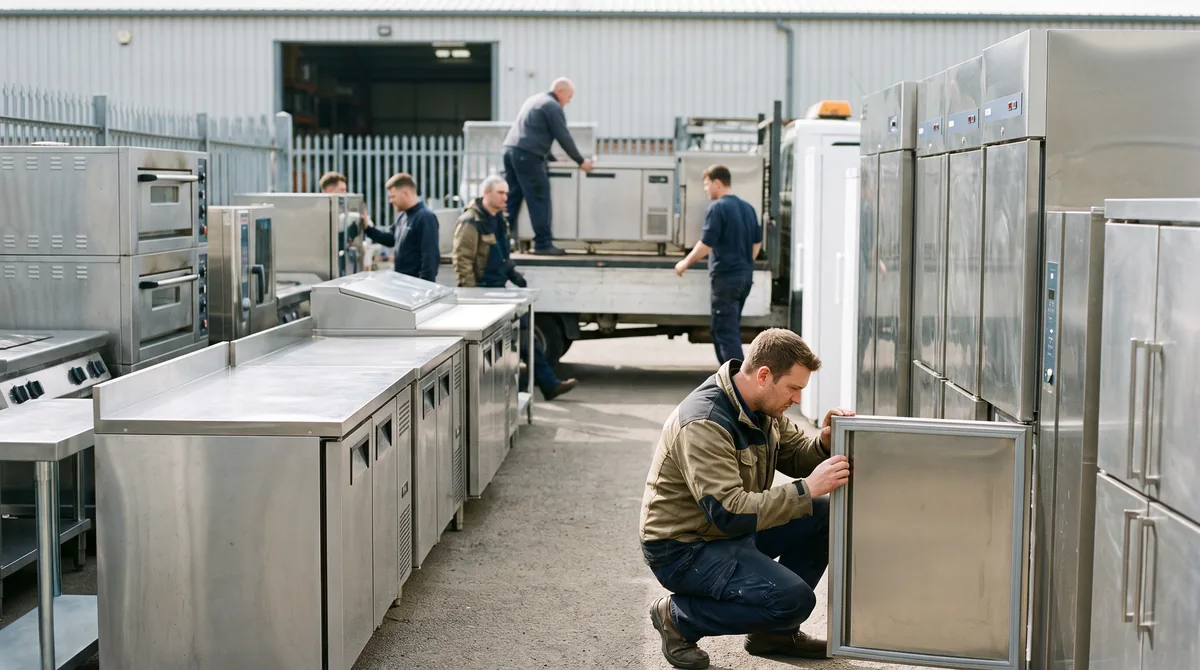
Simple mechanical equipment — benches, shelving, sinks, some gas cooking — survives previous owners well and can be excellent value used. Be much more careful with compressor-based refrigeration and anything with a boiler or complex electronics: sealed-system condition and parts support are effectively unverifiable at the point of sale, the failure modes are expensive, and a manufacturer warranty is worth real money on exactly this equipment.
There's a second cost to buying second-hand that's easy to miss: you lose the price transparency of the new market. A new-model price can be checked against dozens of listed retailers in minutes; a used listing has no such comparison, so you're relying entirely on the seller's word for whether the discount is real. That opacity is exactly the arithmetic that the 38.6% dealer spread above should make you suspicious of — if new stock varies that much between transparent, comparable retailers, a single opaque used listing tells you very little about whether you're actually getting a deal.
The practical test we'd apply: before buying a used piece of compressor-based or boiler-driven equipment, price the equivalent new model against the bands above. If the used price isn't a meaningful discount against the bottom of the new middle-half band once you account for the remaining warranty you're giving up, the new unit is very often the better buy — you get a warranty, a known service history, and a manufacturer parts supply chain, for a price gap that turns out to be smaller than it looked on the listing. This applies most sharply to refrigeration and combi ovens, and least sharply to simple gas equipment and stainless fabrication, where used condition is easy to inspect directly and there's no sealed system or control board hiding a fault.
What first-time buyers forget
A few line items consistently get missed on a first pass at an equipment list, independent of the services budget covered above:
- Delivery. Advertised equipment prices exclude it, and it's not trivial on large cooking equipment or walk-in components.
- Site access. A combi oven or a walk-in panel that won't fit through the kitchen doorway is a crane, a removed window, or a redesign — check clearances before you order, not after delivery.
- Installation and commissioning. Also excluded from the advertised price on every table in this guide. Gas and electrical connection by a licensed trade, and commissioning that confirms the unit actually performs to spec on your site, are separate costs from the purchase price.
- Spares and consumables. Door gaskets, filters, oven baskets, gastronorm inserts — small individually, a real line item in aggregate, and worth asking your dealer what they stock locally before you need one urgently.
- Staff training on new equipment, particularly combi ovens and anything programmable, where under-using the equipment's actual capability is a slower, quieter cost than any line item above.
- Contingency. Covered in detail below, and worth repeating here because it's the item most often cut when a budget gets tight during planning — exactly the wrong moment to cut it.
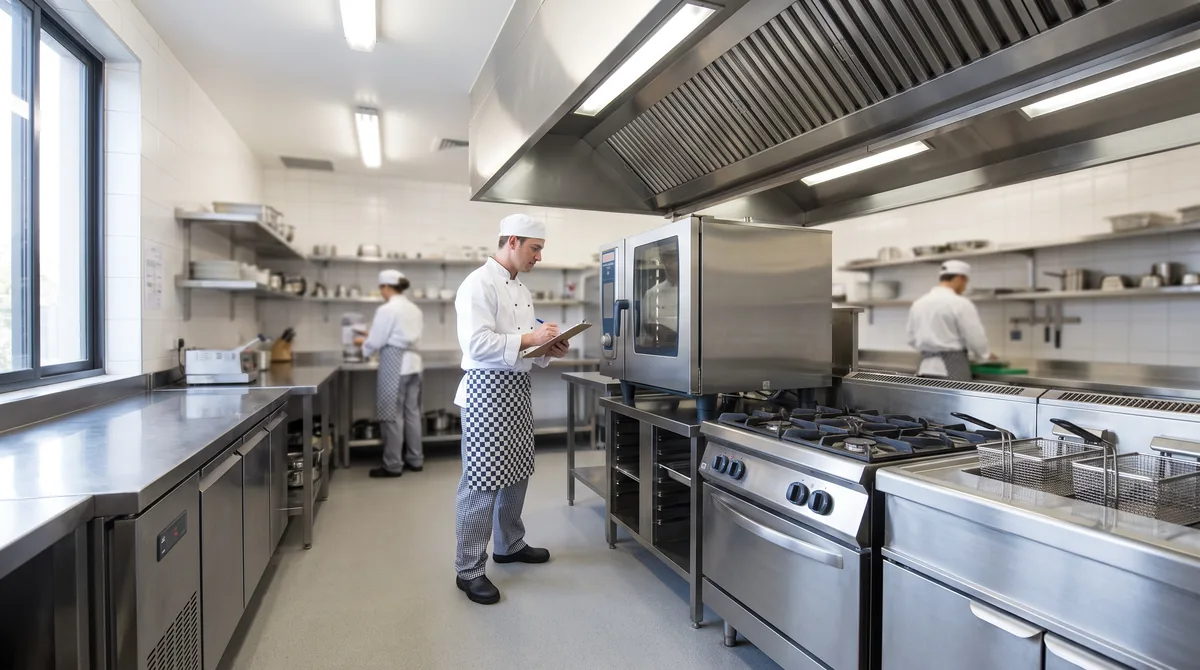
Keep a contingency, seriously. Every fit-out finds something once walls open: a switchboard that needs upgrading, a slab that needs a new floor waste, a landlord's exhaust riser that's smaller than drawn. We don't have data to tell you what percentage to hold — that's a construction-risk figure, not an equipment-price figure, and it's outside what our dataset can support. Ask your builder or project manager what contingency they'd hold for a fit-out of your scope, and treat it as non-negotiable once set. If you don't spend it, it becomes your opening stock budget instead.
Comparing two quotes that are structured differently
Two fit-out or equipment quotes rarely arrive in a comparable format, which makes them hard to compare honestly even when both are legitimate. Work through this order before you decide between them:
- List every model number on both quotes, not just the category ("combi oven," "underbench fridge"). A quote that names a model can be checked against the market; one that doesn't, can't.
- Check each model individually against current retailer prices for that exact model number. Package pricing hides the spread between a strong line and a soft one inside a single bottom-line figure.
- Separate what's actually included. Delivery, installation, commissioning and warranty terms differ between quotes even when the equipment list looks identical on paper. A lower headline figure that excludes installation is not necessarily the cheaper quote.
- Confirm services scope is genuinely comparable. One quote may assume existing services capacity is adequate; another may include an electrical upgrade. That difference alone can move a total by more than the entire equipment list.
- Ask what happens to the difference if a listed model becomes unavailable and is substituted. A substitution clause that lets a supplier swap in an unpriced equivalent removes your ability to compare at all.
- Check warranty terms line by line, not as a headline claim. "Full warranty" means very different things depending on whether labour, call-out and parts are all included, and whether it's backed by the manufacturer or the reseller. A cheaper quote with a thinner warranty is not automatically the worse choice, but you should know which one you're accepting.
- Total the real cost, not the equipment subtotal. Add delivery, installation and commissioning back onto every quote before you compare bottom lines — a quote that looks cheaper on the equipment line alone can lose that advantage entirely once the excluded items are added back in on both sides consistently.
None of this requires trusting either supplier's framing of their own quote. It requires the model numbers, because everything else in the comparison depends on knowing you're actually looking at the same machine.
This is the exact discipline why model numbers matter walks through in more detail, because model-number precision is what makes every other step on this list possible.
Frequently asked questions
What does a commercial kitchen fit-out actually cost in total?
We don't publish that figure, because we hold no services, trade or labour cost data and won't estimate one. What we can show is verified equipment pricing by department — see the tables above — which is the portion of the budget you can price before engaging a builder or trade.
How much of my budget should be equipment versus services?
We don't have the data to state a split, and any figure you see elsewhere quoting a fixed percentage should be treated as marketing rather than evidence. Services routinely cost a substantial amount against the equipment list, driven by your specific site conditions — get quotes from licensed trades against your actual equipment list to find your real split.
Which equipment is worth spending up on, and which isn't?
Spend up on equipment that runs continuously or carries your core menu — refrigeration and your primary cookline. Economise on equipment used briefly or occasionally. Benches, shelving and simple fabrications are generally safe to buy mid-market rather than premium.
Is second-hand equipment a false economy?
It depends on the equipment. Simple mechanical items — benches, shelving, some gas cooking — hold up well used. Compressor-based refrigeration and anything with a boiler carries higher risk: sealed-system condition is unverifiable at sale, and you lose the price transparency of the new market that would otherwise tell you whether the discount is genuine.
Why won't KitchenCompare quote a fit-out cost per square metre?
Because we have no evidence for one. Services and building costs vary with your site's existing capacity, your local authority's requirements and your building's condition — none of which a per-square-metre national average can honestly represent. We publish what our data actually supports: verified equipment prices.
What did I forget to budget for?
Delivery, site access for large equipment, installation and commissioning, spares and consumables, staff training, and a contingency. All are commonly missed on a first pass and none are included in the advertised equipment prices shown in this guide.
How do I compare two quotes that are structured completely differently?
List every model number, check each individually against current market prices, separate what's actually included (delivery, install, commissioning, warranty), confirm the services scope is genuinely comparable, and check what happens if a listed model is substituted. See the walkthrough above.
How big should my contingency be?
We don't have construction-risk data to state a figure. Ask your builder or project manager for a contingency appropriate to your fit-out's scope, and treat it as a fixed, protected line rather than the first thing cut when the budget tightens.
Why do the same fridge or oven models cost different amounts at different retailers?
Retailer pricing, stock position and margin strategy differ, and Australian commercial kitchen equipment retail is not a fixed-price market. Our data shows a median 38.6% spread on the same model across dealers (as at 21 August 2026) — checking the exact model number against multiple retailers is the direct way to capture that gap.
Where to go next
Start with the two heaviest lines on most equipment lists: refrigeration and cooking equipment. Check the exact model number of everything on your list against current prices before you sign a package quote, and get your services scope quoted against that same, specific equipment list — not a category placeholder — before you commit to either.