


Combi Oven Buying Guide: Capacity, Utilities and Controls
What a combi oven does, how to size one by simultaneous GN pan capacity, and the water, power, ventilation and cleaning questions to settle before you buy.
In this article
- Combi versus convection
- Sizing by simultaneous GN pan capacity
- Electric or gas
- Controls: manual, programmable and automatic
- Water treatment, drainage and cleaning
- Ventilation, clearance and site preflight
- Ownership cost and comparing exact models
- Questions to ask a supplier
- Frequently asked questions
- Where to go next
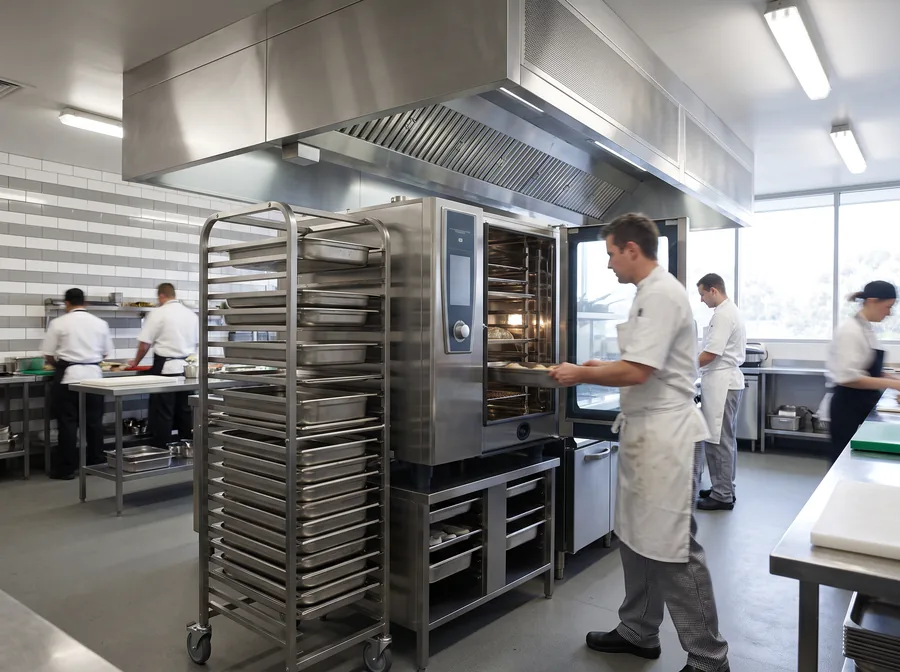
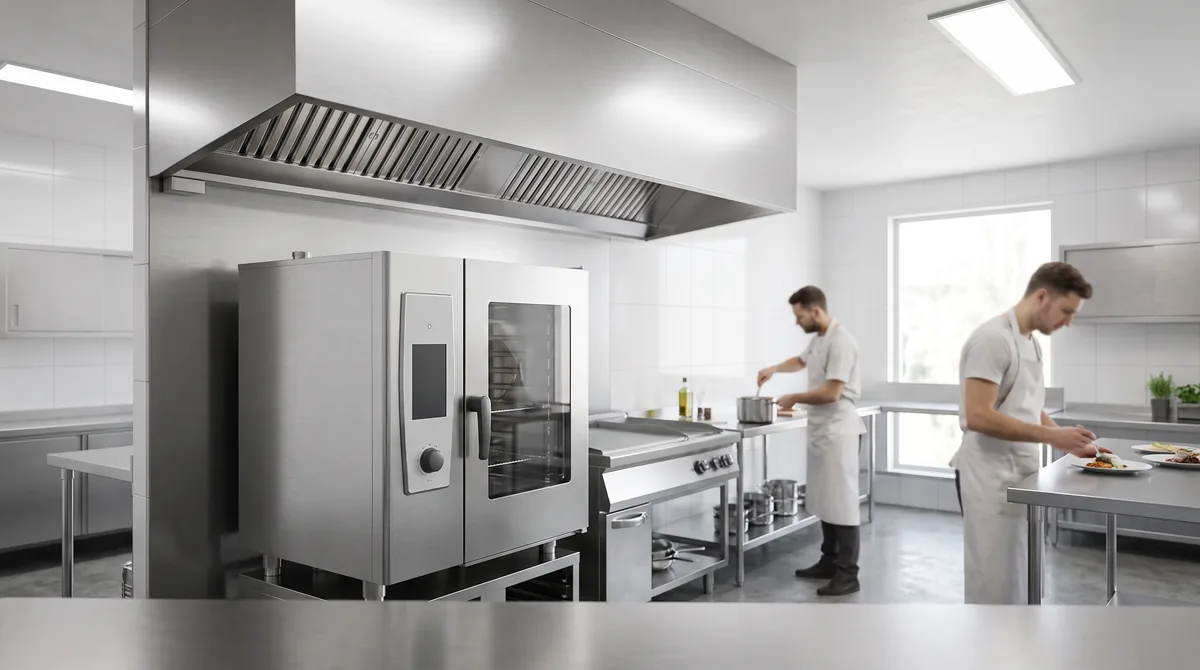
A combi oven combines convection heat and steam in one cavity, and can run either alone or together. That lets one machine roast, steam, bake, regenerate and hold, which is why it displaces several pieces of equipment in a well-run kitchen.
It is not for every kitchen. A combi earns its cost where you cook varied product in volume, need consistency across shifts, and can commit to the water treatment and cleaning routine it requires. A venue with a narrow menu, a small service and no appetite for a maintenance regime is usually better served by a convection oven.
Combi versus convection
A convection oven moves hot dry air. It roasts and bakes well, it is cheaper to buy, simpler to install and simpler to look after.
A combi adds controlled humidity. That gives you steaming, combination cooking that reduces shrinkage and drying, reliable regeneration of plated or panned food, and programmable repeatability across staff. The cost is a more demanding installation, a water treatment requirement, a cleaning system and a higher purchase price.
Choose a combi when humidity control and repeatability are worth those costs to you. Choose convection when they are not. Compare live options in combi ovens.
Sizing by simultaneous GN pan capacity
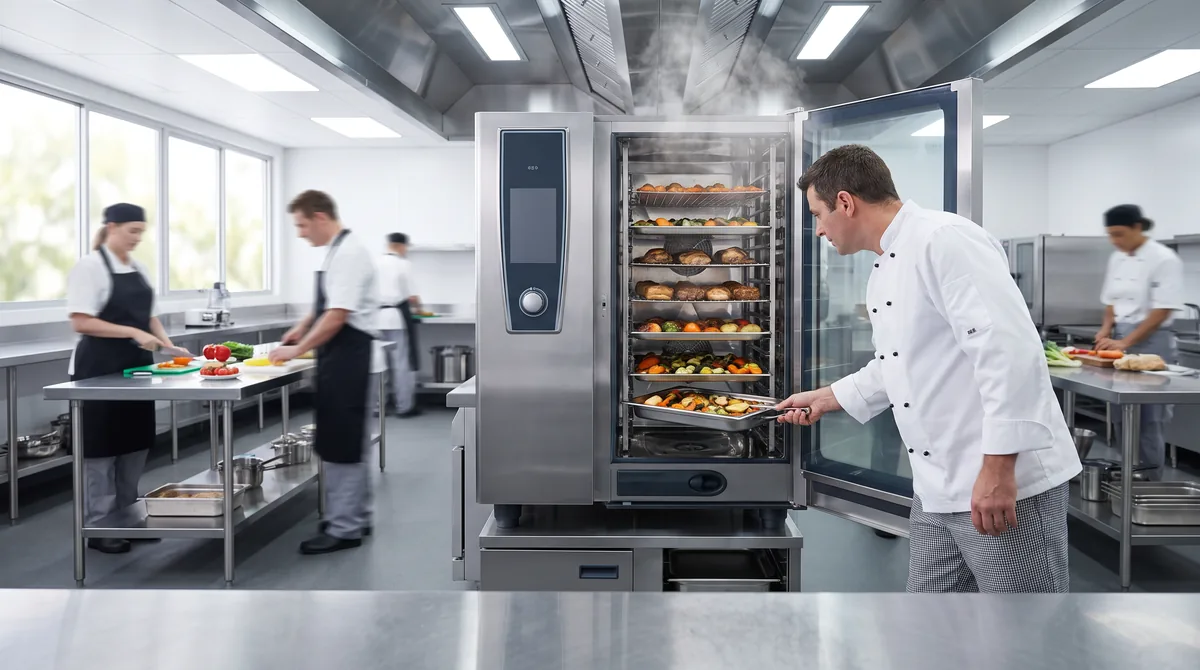
Combi ovens are specified by the number and size of gastronorm pans or trays they hold — 6 x 1/1, 10 x 1/1, 20 x 1/1 and so on. Meals-per-day figures in marketing material are not a specification.
Size it like this:
- Take your busiest service, not your daily total.
- List what has to be in the oven at the same time during that service. Simultaneous capacity is the constraint; sequential cooking is a scheduling problem, not a capacity one.
- Convert to GN pans at the depth you actually use. Deep pans reduce the usable rack count.
- Allow for mixed loads. Cooking two products together needs compatible programs and space between them.
- Add headroom for functions and growth, and consider whether two smaller ovens give you more flexibility than one large one — two cavities let you run different programs at once and leave you trading when one is down.
A 6-pan oven suits a café or small bistro; 10-pan is the common restaurant and pub size; 20-pan belongs in production kitchens and large function venues.
| Size | Typically suits | Plan around |
|---|---|---|
| 6 x 1/1 pan | A cafe or small bistro | Bench or stand height, and access to the door swing |
| 10 x 1/1 pan | The common restaurant and pub size | Three-phase supply is common at this size and above |
| 20 x 1/1 pan | Production kitchens and large function venues | Delivery path, floor loading and service access |
| Two smaller ovens | Venues needing two programs at once, or continuity | Two sets of services; you keep trading when one is down |
Electric or gas
This is a site and services decision.
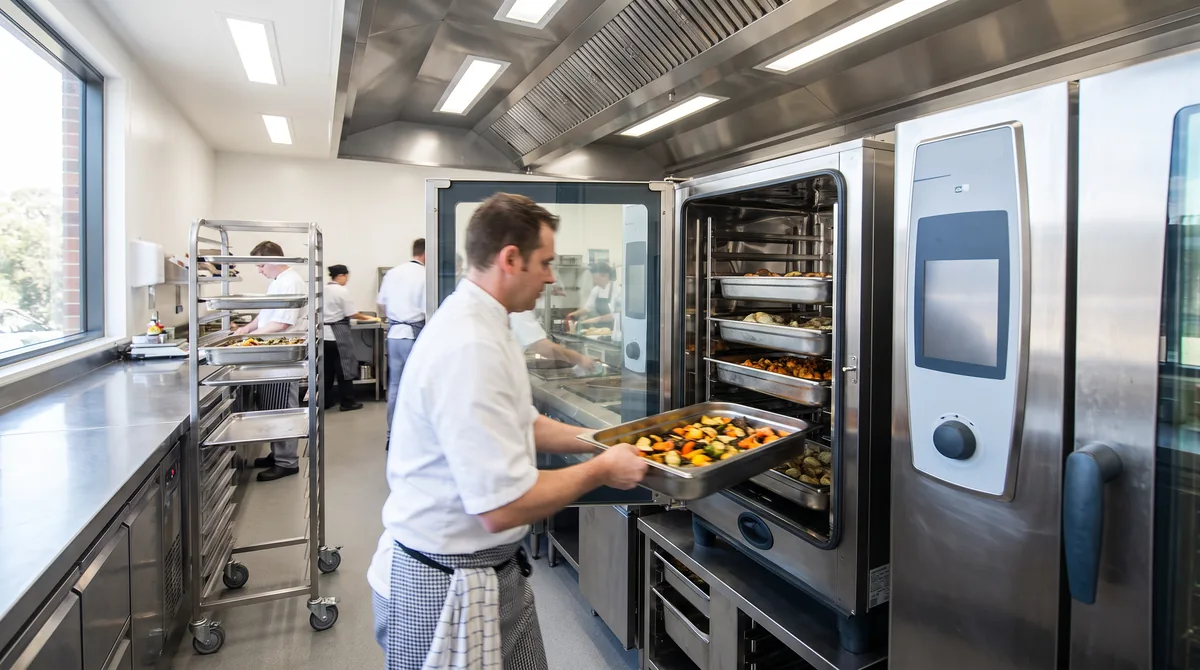
Electric needs substantial capacity at the location. Larger combi ovens commonly require three phase, and the required supply is stated for the exact model. Where the switchboard cannot supply it, the upgrade cost belongs in the purchase decision.
Gas needs a gas connection sized for the appliance and the flue and ventilation arrangements that go with it. Where gas is already in the kitchen and electrical capacity is tight, it can be the cheaper installation.
Cooking performance is not the deciding factor for most buyers. Get the exact model's stated electrical or gas requirement in writing, and have a licensed electrician or gasfitter confirm the site before you commit.
Controls: manual, programmable and automatic
Pay for the control system your team will actually use.
- Manual gives direct control of temperature, humidity and time. It suits a skilled, stable kitchen brigade and it is the cheapest to buy.
- Programmable stores recipes so any staff member can reproduce a result. This is where most venues get the value, because it converts a chef's knowledge into something a Sunday shift can repeat.
- Fully automatic adds probes, automated climate management and guided cooking. It suits high-turnover staffing and multi-site operations that need identical output everywhere.
The wrong answer is buying an advanced control system and running it as a manual oven. That happens often, and it is money spent on nothing.
Water treatment, drainage and cleaning
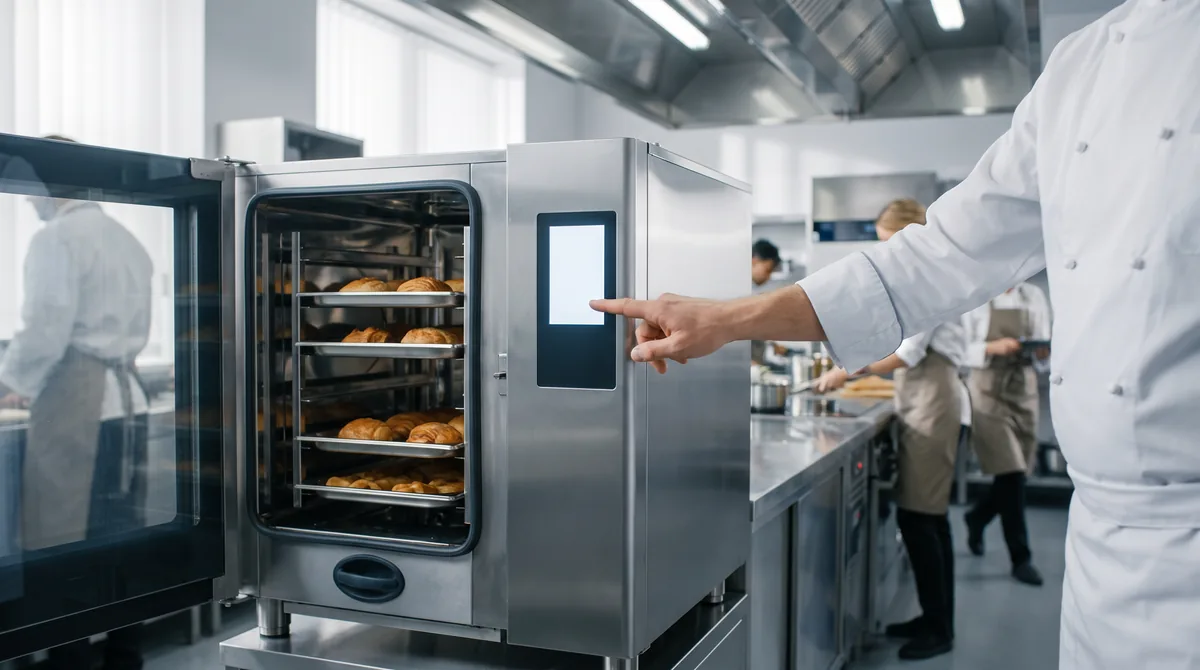
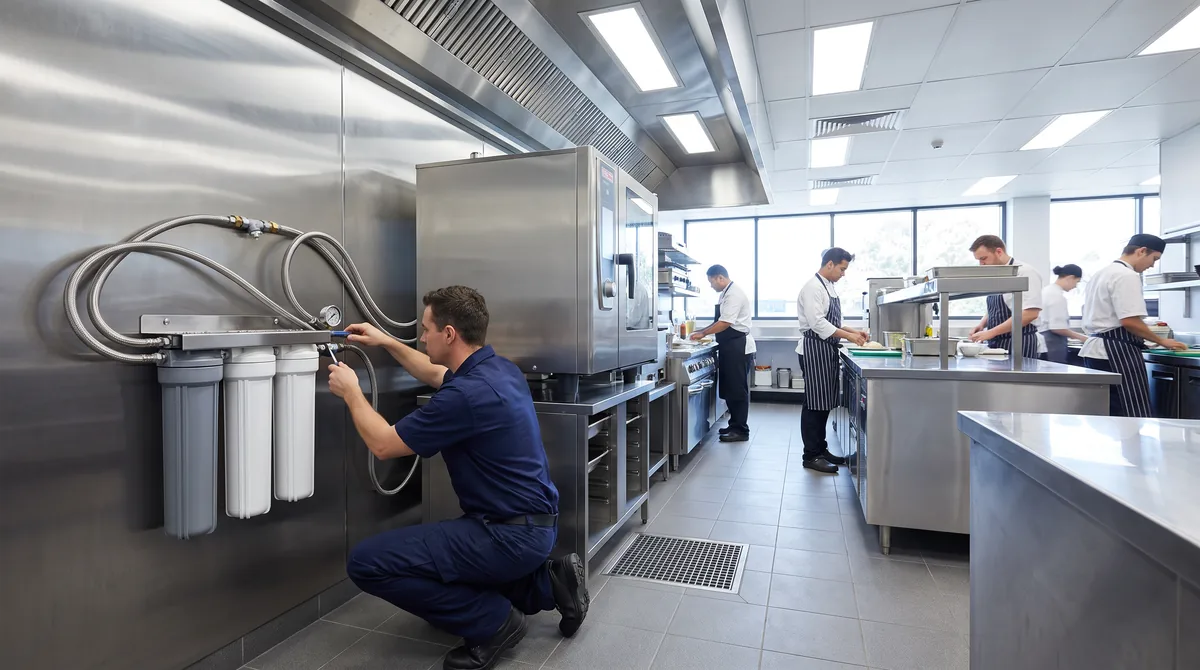
Water treatment is not optional. A combi oven boils water continuously, and untreated water scales the boiler, the steam generator and the cavity. Scale damage is expensive and is commonly excluded from warranty. The manufacturer specifies the water quality required for the exact model — often in terms of hardness, chloride and conductivity — and the filtration or treatment needed to reach it depends on your local supply. Have your water tested and specify treatment at purchase time.
Drainage is required for the cavity and for the cleaning cycle, and the drain requirements (position, temperature tolerance, air gap) are model specific.
The cleaning system varies. Some ovens use cartridges or tablets, some use liquid chemicals, some are semi-automatic. Each has a different ongoing cost and a different chemical handling requirement. Follow the manufacturer's cleaning procedure for your exact model, use only the chemicals it approves, and build the routine into the roster.
Ventilation, clearance and site preflight
- Ventilation. Combi ovens release steam and heat. Mechanical exhaust ventilation requirements for commercial cooking equipment in Australia are addressed by the National Construction Code (Part F6D12 in the current NCC), and your state, territory or local authority may add requirements. Some models are offered with condensation hoods; that does not automatically satisfy the requirement for your site. Have it assessed for your actual installation by a competent person — do not rely on a general claim that a combi does or does not need a hood.
- Clearances. The manufacturer states clearances at the sides, back and above for the exact model. These are not suggestions; they affect both performance and warranty.
- Access for service. Leave room to open the door fully and to get a technician to the panels.
- Floor and stand. Bench, stand or floor-standing, and whether the floor can take it loaded.
- Delivery path. Measure doorways, corners and lifts before you order a 20-pan oven.
Verify the exact model's requirements against manufacturer documentation and with licensed trades before purchase. This is a buyer's preflight, not an installation procedure.
Water treatment is not an accessory
A combi boils water continuously. Untreated water scales the boiler, the steam generator and the cavity, and scale damage is commonly excluded from warranty. The manufacturer states the water quality the exact model requires — often as hardness, chloride and conductivity — and the treatment needed to reach it depends on your local supply. Have the water tested and specify treatment at purchase time, not after the first fault.
Ownership cost and comparing exact models
Beyond the purchase price: installation by licensed trades, any switchboard or gas work, water treatment and its ongoing cartridges, cleaning chemicals, water and energy, planned servicing, and downtime.
Current market prices belong in a dated report rather than in an evergreen guide. When the dated combi oven price report is published it will carry verified figures from live dealer listings with a stated as-at date.
For the comparison, one series can span different pan counts, electric and gas variants, different control tiers, different cleaning systems and different power connections — behind model numbers that differ by a suffix. Every comparison on this site is matched on the exact supplier model number rather than on product names; see why model numbers matter.
Compare like for like on: pan count and pan size, electric or gas and the exact supply required, control tier, cleaning system and its consumables, water treatment included or not, stand or installation kit included, warranty terms and local service coverage.
Know the pan count and the fuel? Compare combi ovens on the exact supplier model number, with live retailer prices and price history — never matched on product names.
Compare combi ovensQuestions to ask a supplier
- What is this exact model's electrical or gas requirement, and does it need three phase?
- What water quality does the manufacturer require, and what treatment will my supply need?
- What is the cleaning system, and what do its consumables cost per year?
- What ventilation does this installation require under the NCC and my local requirements?
- What clearances does the manufacturer specify?
- Is a stand, installation kit or water treatment included in this quote?
- What training is included, and is it delivered on site?
- Where are spare parts held, and what is the response time in my area?
- What does the warranty exclude — scale damage in particular?
Frequently asked questions
How much does a commercial combi oven cost?
It varies substantially with pan capacity, control tier, fuel type and inclusions, and prices move enough that a fixed figure in an evergreen guide would be misleading within months. Current verified figures belong in a dated price report drawn from live dealer listings. Budget installation, water treatment and cleaning consumables alongside the oven.
What is a commercial combi oven?
A combi oven combines convection heat and steam in a single cavity and can run either mode alone or both together under controlled humidity. That lets one machine roast, steam, bake, regenerate and hold, replacing several separate appliances. The trade-off is a more demanding installation, a water treatment requirement and a cleaning regime.
What size combi oven do I need?
Size by the number of gastronorm pans you need in the oven at the same time during your busiest service, at the pan depth you actually use. Meals-per-day marketing figures are not a specification. Six pans suits a café or small bistro, ten pans is the common restaurant and pub size, and twenty pans belongs in production and function kitchens.
Combi oven or convection oven?
Choose convection if you mainly roast and bake, want a cheaper and simpler machine, and do not need humidity control. Choose a combi if you need steaming, combination cooking, reliable regeneration and programmable repeatability across shifts, and you can commit to water treatment and the cleaning routine. The combi costs more to buy, install and run.
Gas or electric combi oven?
It is a site decision more than a cooking one. Electric models — especially larger ones — often require three-phase supply, and a switchboard upgrade can dominate the cost. Gas needs a correctly sized connection plus its flue and ventilation arrangements. Get the exact model's stated requirement and have a licensed trade confirm what your site can supply.
Does a combi oven need a hood?
Ventilation requirements for commercial cooking equipment in Australia are set by the National Construction Code and by your state, territory or local authority, and they are assessed against the actual installation. Some models are available with condensation hoods, but that does not automatically satisfy the requirement for your site. Have a competent person assess your specific installation rather than relying on a general answer.
How often should a combi oven be cleaned?
Follow the manufacturer's procedure and interval for your exact model, using only the chemicals it approves. In practice most combi ovens need a cleaning cycle at the end of each day of use, plus regular checks of seals, filters and the water treatment cartridge. The manual governs; a generic schedule from a supplier's blog does not.
Where to go next
Compare live options in combi ovens. For the routines that keep one running, see maintenance habits that extend commercial equipment life.